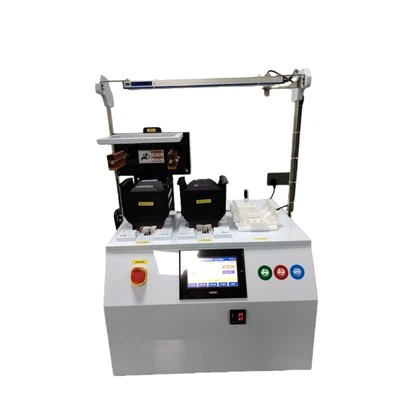
Hey there! As a supplier of LPCVD Equipment, I'm super stoked to dive into how our amazing gear deposits films on flexible substrates. It's a pretty cool process, and I'm gonna break it down for you in a way that's easy to understand.
Let's start with the basics. LPCVD stands for Low-Pressure Chemical Vapor Deposition. It's a technique that's widely used in the semiconductor and thin-film industries to create high-quality films on various substrates. And when it comes to flexible substrates, like plastics or polymers, LPCVD has some unique advantages.
First off, why use flexible substrates? Well, they're lightweight, bendable, and can be used in a whole bunch of applications, from flexible displays to wearable electronics. But depositing films on these substrates isn't as straightforward as it is on rigid ones. That's where our LPCVD Equipment comes in.
How the LPCVD Process Works
The LPCVD process starts with a reaction chamber, which is basically a sealed container where all the magic happens. Inside the chamber, we place the flexible substrate on a holder. The substrate is usually pre-cleaned to remove any dirt or contaminants that could affect the film quality.
Next, we introduce precursor gases into the chamber. These gases contain the elements that will make up the film we want to deposit. For example, if we want to deposit a silicon nitride film, we might use silane (SiH₄) and ammonia (NH₃) as precursors.
Once the precursor gases are in the chamber, we heat the substrate to a specific temperature. The heat causes the precursor gases to react and break down into their constituent elements. These elements then diffuse onto the surface of the substrate and form a thin film.
The key to successful film deposition on flexible substrates is to control the process parameters carefully. This includes things like the temperature, pressure, gas flow rates, and deposition time. If these parameters are not optimized, the film may have defects, such as cracks or uneven thickness.
Advantages of LPCVD for Flexible Substrates
One of the main advantages of using LPCVD Equipment for film deposition on flexible substrates is the low deposition temperature. Unlike some other deposition techniques, LPCVD can be performed at relatively low temperatures, which is important because flexible substrates often have a low melting point. By keeping the temperature low, we can avoid damaging the substrate and ensure that the film adheres well to its surface.
Another advantage is the high-quality films that LPCVD can produce. The films deposited by LPCVD are typically very uniform in thickness and composition, which is crucial for applications where precise film properties are required. Additionally, LPCVD films have good adhesion to the substrate, which means they are less likely to peel off or delaminate.
Challenges and Solutions
Of course, depositing films on flexible substrates with LPCVD isn't without its challenges. One of the biggest challenges is dealing with the flexibility of the substrate itself. When the substrate bends or moves during the deposition process, it can cause the film to crack or delaminate. To overcome this challenge, we use special holders and fixtures that can keep the substrate flat and stable during deposition.
Another challenge is the potential for contamination. Since flexible substrates are often more porous than rigid ones, they can absorb contaminants more easily. To prevent contamination, we use high-purity precursor gases and maintain a clean environment inside the reaction chamber.
Comparing with Other Deposition Techniques
There are other deposition techniques out there, such as PECVD Equipment and ICP-CVD System. While these techniques also have their own advantages, LPCVD has some unique features that make it a great choice for flexible substrates.
PECVD, or Plasma-Enhanced Chemical Vapor Deposition, uses a plasma to enhance the chemical reactions between the precursor gases. This allows for lower deposition temperatures and faster deposition rates compared to LPCVD. However, PECVD can sometimes produce films with higher stress, which can be a problem for flexible substrates.
ICP-CVD, or Inductively Coupled Plasma Chemical Vapor Deposition, uses an inductively coupled plasma to generate high-energy ions. This can result in very high-quality films, but it also requires a more complex and expensive setup. LPCVD, on the other hand, is a simpler and more cost-effective option for many applications.
Real-World Applications
The films deposited by our LPCVD Equipment on flexible substrates have a wide range of real-world applications. One of the most exciting applications is in the field of flexible displays. Flexible displays are becoming increasingly popular in smartphones, tablets, and wearable devices because they offer a more immersive viewing experience and can be bent or folded to fit different form factors.
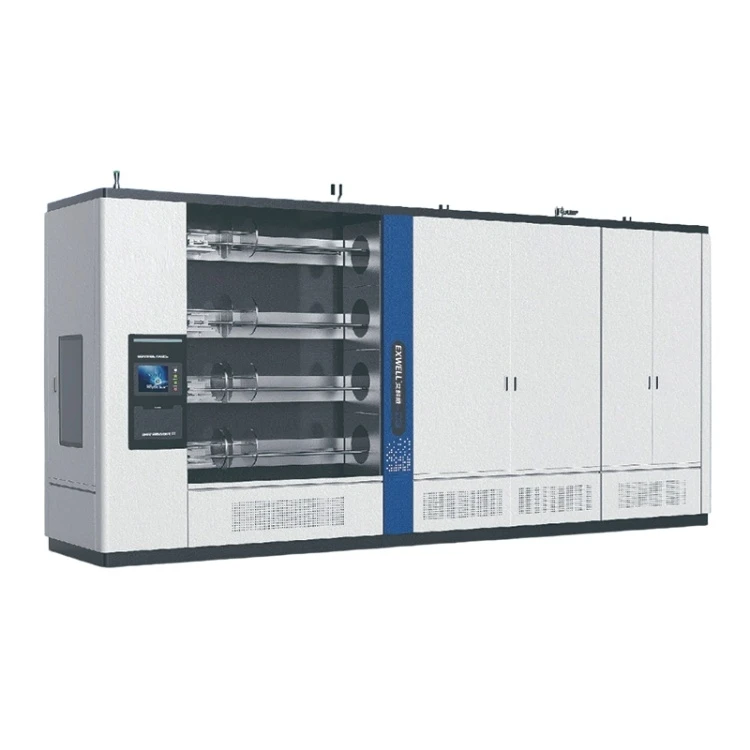

Another application is in the area of flexible sensors. Flexible sensors can be used to measure things like temperature, pressure, and humidity. They are often used in healthcare, environmental monitoring, and industrial applications.
Why Choose Our LPCVD Equipment
As a supplier of LPCVD Equipment, we take pride in offering high-quality, reliable equipment that is designed to meet the specific needs of our customers. Our equipment is easy to operate and maintain, and we provide excellent customer support to ensure that our customers get the most out of their investment.
We also offer a range of customization options, so you can tailor our LPCVD Equipment to your specific requirements. Whether you need a small-scale system for research and development or a large-scale production system, we can work with you to find the right solution.
Contact Us for Purchase and Consultation
If you're interested in learning more about our LPCVD Equipment and how it can be used to deposit films on flexible substrates, we'd love to hear from you. Whether you're a researcher looking to explore new applications or a manufacturer looking to scale up production, our team of experts is here to help. Just reach out to us, and we'll be happy to discuss your needs and provide you with a detailed quote. Let's work together to take your flexible substrate film deposition to the next level!
References
- Smith, J. (2018). Chemical Vapor Deposition: Principles and Applications. Wiley.
- Johnson, A. (2019). Flexible Electronics: Materials and Applications. CRC Press.
- Brown, R. (2020). Thin-Film Deposition Techniques for Microelectronics. Springer.