


Your Professional CVD Equipment Supplier
Nice-tech is a professional semiconductor equipment provider with a dedicated factory and an experienced technical team. Our operations are supported by multiple production lines equipped with standardized process control and key semiconductor-related equipment to ensure stable quality and delivery. The company is backed by a skilled team of engineers, technicians, and project specialists with solid industry experience, enabling effective coordination between equipment suppliers and end users.
-
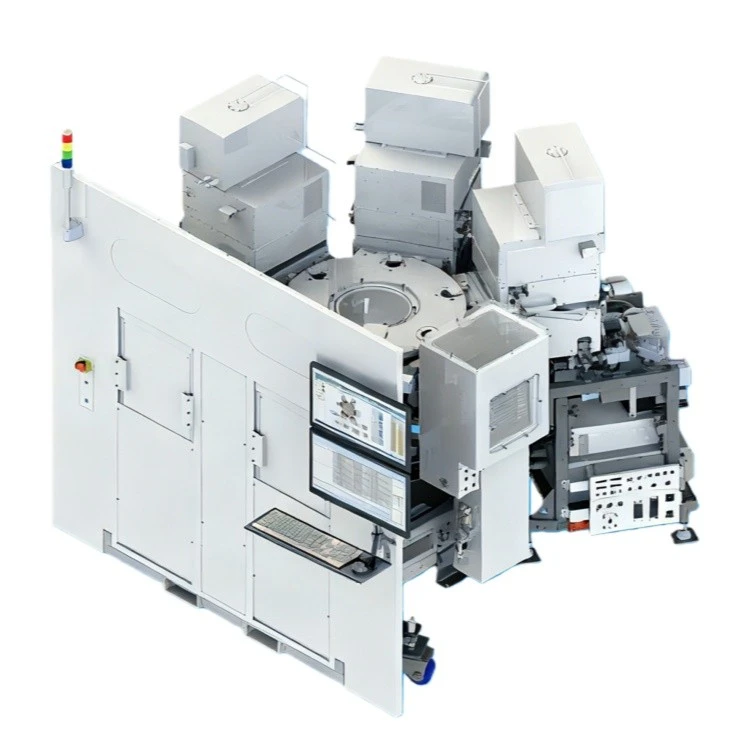
![Industrial MOCVD System]() Industrial MOCVD SystemNice-Tech CV600/CV700 series are high-end mass-production MOCVD devices for compound semiconductor epitaxial growth, adopting proprietary planetary-satellite dual rotation technology to realize multi-wafer growth with single-wafer-level...view more
Industrial MOCVD SystemNice-Tech CV600/CV700 series are high-end mass-production MOCVD devices for compound semiconductor epitaxial growth, adopting proprietary planetary-satellite dual rotation technology to realize multi-wafer growth with single-wafer-level...view more -
![Standard MOCVD System]() Standard MOCVD SystemNice-Tech MC150/MC200/MC300 series MOCVD equipment adopts the close-coupled vertical showerhead gas injection model, with inherent epitaxial uniformity advantages via high-density staggered source gas nozzles and controllable small...view more
Standard MOCVD SystemNice-Tech MC150/MC200/MC300 series MOCVD equipment adopts the close-coupled vertical showerhead gas injection model, with inherent epitaxial uniformity advantages via high-density staggered source gas nozzles and controllable small...view more -
![GaN-MOCVD]()
-
![MOCVD]()
-
![Vertical LPCVD System]() Vertical LPCVD SystemThe Vertical LPCVD TEOS/Poly/SiN is a low-pressure chemical vapor deposition system for semiconductor manufacturing. It’s used to deposit high-quality Poly, TEOS, SiN, and HTO thin films.view more
Vertical LPCVD SystemThe Vertical LPCVD TEOS/Poly/SiN is a low-pressure chemical vapor deposition system for semiconductor manufacturing. It’s used to deposit high-quality Poly, TEOS, SiN, and HTO thin films.view more -
![PECVD Equipment]() PECVD EquipmentNice-Tech has rolled out three PECVD models—Depomerits PE 100, PE 200, and PE 300—and together they form a product matrix that’s got every key scenario covered: from lab research to small-batch runs, all the way to large-scale mass...view more
PECVD EquipmentNice-Tech has rolled out three PECVD models—Depomerits PE 100, PE 200, and PE 300—and together they form a product matrix that’s got every key scenario covered: from lab research to small-batch runs, all the way to large-scale mass...view more -
![ICP-CVD System]() ICP-CVD SystemNice-Tech’ 8-inch ICP-CVD system is designed for thin-film deposition on 8-inch wafers. It generates high-density plasma via inductive coupling (ICP) and establishes bias through capacitive coupling (CCP), enabling low-temperature...view more
ICP-CVD SystemNice-Tech’ 8-inch ICP-CVD system is designed for thin-film deposition on 8-inch wafers. It generates high-density plasma via inductive coupling (ICP) and establishes bias through capacitive coupling (CCP), enabling low-temperature...view more -
![LPCVD Equipment]() LPCVD EquipmentLPCVD (Low Pressure Chemical Vapor Deposition) is a core semiconductor process tech—under low-pressure conditions, it heats gaseous compounds to trigger reactions, depositing stable solid thin films on substrate surfaces. It’s mainly...view more
LPCVD EquipmentLPCVD (Low Pressure Chemical Vapor Deposition) is a core semiconductor process tech—under low-pressure conditions, it heats gaseous compounds to trigger reactions, depositing stable solid thin films on substrate surfaces. It’s mainly...view more


why choose us
Tailored Solution Delivery
Our experienced team analyzes clients' specific needs to match the most suitable semiconductor equipment and offer customized solutions for different production and R&D scenarios.
Comprehensive Technical Support
We provide full-cycle technical assistance, from equipment commissioning to maintenance, including on-site troubleshooting and real-time online consultation, reducing operational hassles.
Support for Advanced Processes
We continuously invest in industry insights and adapt to cutting-edge tech trends, offering high-precision equipment solutions and upgrading services to meet high-end chip production needs.
Service Advantages
Offer 1v1 online support for equipment operation, parameter adjustment, and process optimization, responding to your questions promptly.
Plasma Enhanced Chemical Vapor Deposition (PECVD) equipment is a vital technology in the fabrication of thin films and coatings across various industries. It uses plasma to deposit materials onto substrates at relatively low temperatures, enabling the production of high-quality films with precise control over thickness and composition. PECVD is especially valued in electronics, solar panels, and protective coatings, where material performance is critical.
|
Category |
Parameter |
Details |
|
Substrate Compatibility |
Wafer Size |
6-inch / 8-inch / 12-inch (compatible with standard thickness and bonding-thickened wafers) |
|
Substrate Material |
Si, SiC, GaAs, GaN, Glass Wafer |
|
|
Temperature Control |
Process Temperature Range |
75℃ ~ 420℃ (covers low-temperature and conventional processes, meets SEMI process compatibility requirements) |
|
In-Wafer Temperature Uniformity |
< 3℃ (for 6-inch/8-inch wafers, based on 1-Piece AlN-coated Platen) |
|
|
Vacuum & Gas System |
Gas Panel Configuration |
IGS gas panel, supports up to 10× Gaslines + TEOS |
|
Process Gas Compatibility |
SiH₄, N₂O, NH₃, N₂, H₂, B₂H₆, PH₃, SiF₄, O₂, He, Ar, NF₃ |
|
|
Vacuum Level |
Base pressure ≤ 5×10⁻⁶ Torr; Process pressure range: 1~10 Torr (referenced to SEMI E113 standard) |
|
|
Radio Frequency (RF) System |
RF Power Supply Type |
AE Dual-Frequency RFG (HF + LF), compliant with SEMI E113 performance criteria |
|
Frequency & Power Range |
HF: 13.56 MHz (5~3000W, supports HALO function); LF: 400 KHz (300~500 KHz adjustable, 15~1250W) |
|
|
Key Components |
Showerhead (SHD) |
350mmØ full coverage; special conductive interface; compatible with multi-process requirements |
|
Platen |
1-Piece AlN-coated; SHD-Platen gap adjustable (6~20mm) for process optimization |
Advantages of PECVD Equipment
Low-Temperature Processing: Enables deposition on heat-sensitive materials like polymers, glass, and finished semiconductor wafers without causing thermal damage.
Excellent Film Uniformity and Conformality: Capable of coating complex geometries, non-flat surfaces, and high-aspect-ratio structures with consistent thickness and quality.
Strong Adhesion and High-Density Films: Plasma activation promotes strong bonding between the film and substrate, resulting in durable, pinhole-free coatings with superior barrier properties.
Precise Process Control: By adjusting RF power, pressure, gas mixtures, and temperature, engineers can fine-tune optical, electrical, and mechanical film characteristics—ideal for applications in semiconductors, photovoltaics, and optical coatings.
Precise Process Control: By adjusting RF power, pressure, gas mixtures, and temperature, engineers can fine-tune optical, electrical, and mechanical film characteristics—ideal for applications in semiconductors, photovoltaics, and optical coatings.
Scalability: PECVD systems are available in batch and inline configurations, supporting both R&D and high-volume industrial production.
Types of PECVD Equipment
Low Frequency (LF) PECVD
Operates below 100 kHz, ideal for entry-level applications and gentle processing.
Microwave PECVD
Operates at 2.45 GHz, enabling high-efficiency plasma generation with low thermal impact.

Radio Frequency (RF) PECVD
Operates between 13 MHz and 200 MHz, offering a balanced approach for industrial applications.
Custom & Hybrid PECVD Systems
Combines multiple frequency sources or integrates specialized features for unique applications.
Applications of PECVD Equipment
Electronics:
Used to deposit dielectric layers like silicon nitride and silicon dioxide in semiconductor devices, enhancing insulation and device performance.
01
Solar Energy:
Produces thin-film photovoltaic cells with improved efficiency and durability, such as amorphous silicon layers.
02
Protective Coatings:
Creates corrosion-resistant and wear-resistant coatings on tools, automotive parts, and consumer electronics.
03
Optoelectronics:
Fabricates optical coatings and waveguides for lasers and sensors, improving light transmission and device sensitivity.
04
Biomedical Devices:
Deposits biocompatible coatings on implants and sensors to improve integration and longevity.
05
Components of PECVD Equipment
Reaction Chamber: A vacuum-sealed chamber where the substrate is placed and the deposition occurs.
Gas Delivery System: Precisely mixes and introduces precursor gases into the chamber.
Vacuum System: Pumps that remove air and maintain the ultra-low pressures required for the process.
Energy Source: An RF (Radio Frequency) power supply, often at 13.56 MHz, connected to electrodes inside the chamber to ignite and sustain the plasma.
Substrate Heater: Provides low-level, controlled heat to the substrate to promote surface reactions.
Control System: Automates and monitors all parameters, including gas flow, pressure, RF power, and temperature.
How It Works PECVD Equipment
Chamber Evacuation: The deposition chamber is first evacuated to create a vacuum, removing contaminants and ensuring a controlled environment.
Gas Introduction: Precursor gases (e.g., silane and ammonia for silicon nitride) are introduced into the chamber at controlled flow rates.
Plasma Generation: Radio frequency (typically 13.56 MHz) or microwave energy is applied, ionizing the gas molecules and creating a plasma. This energizes the gas, breaking molecular bonds and forming reactive radicals.
Film Deposition: The reactive species diffuse to the substrate surface, where they chemically react and form a solid thin film. Byproducts are removed via the vacuum system.
Process Control: Parameters such as pressure, temperature, gas ratios, and RF power are tightly regulated to achieve desired film thickness, composition, and properties.
How to Install and Use PECVD Equipment
Component Installation: Assemble the gas delivery system, plasma source (RF electrode or microwave antenna), and power supply according to the manufacturer’s layout specifications.
Vacuum Chamber Setup: Securely mount the substrate holder inside the chamber and connect it to the heating and biasing circuits if applicable.
Gas Line Connection: Attach precursor and purge gas lines using VCR or metal-sealed fittings; perform a helium leak test to confirm integrity.
Evacuation: Initiate the vacuum pump sequence to reduce chamber pressure to base levels (typically <10⁻³ Torr) before introducing process gases.
Parameter Configuration: Set process variables including gas flow rates (e.g., SiH₄, NH₃), RF power (13.56 MHz standard), pressure, and substrate temperature via the control interface.
Substrate Loading: Place the cleaned substrate on the holder, ensuring proper alignment and thermal contact for uniform heating.
Plasma Ignition: Introduce process gas, adjust pressure, and apply RF/microwave power to initiate plasma. Monitor for stable glow discharge (typically pinkish-purple for silane-based plasmas).
Deposition Phase: Maintain constant power, pressure, and temperature for the desired duration. Use in-situ diagnostics (e.g., optical emission spectroscopy) to monitor process stability.
Process Termination: Cease gas flow, turn off power, allow chamber to cool, then vent with inert gas (e.g., nitrogen) before removing the coated substrate.
the final view of project


Hazardous Gas Handling: Many process gases (e.g., silane, ammonia, phosphine) are flammable, toxic, or carcinogenic. Systems must be equipped with proper gas cabinets, purge cycles, and exhaust scrubbers to mitigate risks.
Ventilation and Monitoring: Install laboratory-grade gas detectors (e.g., for H2, SiH4) with audible alarms in the vicinity of gas lines and chambers. Ensure adequate room ventilation and exhaust interlocks.
Personal Protective Equipment (PPE): Operators must wear chemical-resistant gloves, safety goggles, face shields, and flame-resistant lab coats. Respiratory protection may be required in case of leaks.
Pre-Operation Safety Checks: Conduct thorough inspections before startup—verify gas line integrity, vacuum pump function, cooling water flow, and electrical connections.
Emergency Protocols: Clearly post emergency shutdown procedures, gas isolation valves, and evacuation routes. Train all personnel in response to gas leaks, fires, or vacuum failures.
Vacuum Chamber Integrity: Regularly inspect quartz or glass chambers for cracks, scratches, or clouding. Any structural defect can lead to implosion under vacuum, causing flying debris and potential injury.
Implosion and Explosion Risks: Rapid chamber venting due to failure can result in explosive decompression. Always use safety shields or enclosures around the chamber during operation.
Equipment Maintenance: Never operate damaged equipment. Follow preventive maintenance schedules for seals, pumps, and electrical components to prevent malfunctions.
Maintenance and Repair
Vacuum System: Service pumps regularly—change oil in rotary vane pumps and inspect turbomolecular bearings. Check for leaks using a residual gas analyzer.
Gas Delivery: Inspect gas lines for clogs or corrosion; replace filters and purge lines periodically to prevent particulate contamination.
Plasma Components: Electrodes and chamber walls accumulate film deposits over time; schedule periodic cleaning or replacement to avoid arcing and particle shedding.
Consumables: Replace worn reflectors, O-rings, and insulators. Damaged RF windows in microwave systems can reduce coupling efficiency.
Troubleshooting Common Issues:
Poor film adhesion: Check substrate cleaning procedure and plasma pre-treatment settings.
Inconsistent deposition: Verify gas flow calibration and temperature uniformity.
Abnormal plasma color or instability: Inspect for leaks, incorrect gas ratios, or degraded electrodes.
Documentation: Always refer to the manufacturer’s service manual for detailed disassembly, alignment, and calibration procedures. Maintain a log of maintenance activities for traceability and warranty compliance.
FAQ
As one of the most professional cvd equipment manufacturers and suppliers in China, we're featured by quality products and good price. Please rest assured to buy customized cvd equipment from our factory. For quotation and pricelist, contact us now.
3D Surface Topography Measurement System, thin film deposition equipment, LPCVD Furnace


