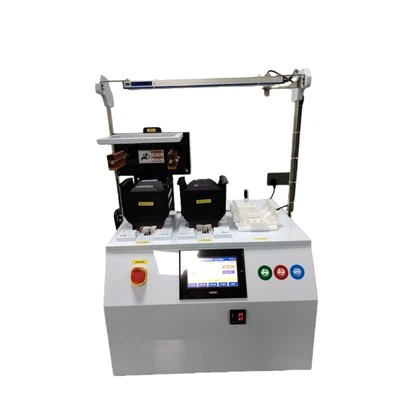
As a supplier of Horizontal Wafer Dryers, I've been deeply involved in the semiconductor manufacturing industry, witnessing the critical role that wafer drying plays in the production process. One question that often arises is how the horizontal position of the wafer in the dryer affects the drying process. In this blog, I'll delve into this topic, exploring the scientific principles and practical implications.
The Basics of Wafer Drying
Before we discuss the impact of the horizontal position, let's briefly understand the wafer drying process. Wafers are thin slices of semiconductor material, typically silicon, used in the production of integrated circuits. After various processing steps, such as etching and cleaning, the wafers need to be dried thoroughly to remove any remaining moisture. This is crucial because even a small amount of water can cause defects in the fabricated circuits, leading to reduced performance or complete failure of the devices.
There are different types of wafer dryers available in the market, including Horizontal Wafer Dryer and Vertical Wafer Dryer. Our focus here is on the horizontal wafer dryer, which holds the wafers horizontally during the drying process.
How the Horizontal Position Affects Drying
Gravity and Liquid Drainage
One of the primary effects of the horizontal position is the influence of gravity on liquid drainage. When a wafer is placed horizontally, gravity acts perpendicular to the surface of the wafer. This means that any liquid on the wafer will tend to drain downwards under the force of gravity. As a result, the liquid is more likely to flow off the edges of the wafer, facilitating faster and more complete drying.
In contrast, in a vertical wafer dryer, the liquid on the wafer may not drain as effectively. The liquid may cling to the surface of the wafer due to surface tension, and gravity acts parallel to the wafer surface, providing less assistance in removing the liquid. This can lead to longer drying times and potentially uneven drying, as some areas of the wafer may retain more liquid than others.
Airflow Distribution
The horizontal position also affects the distribution of airflow within the dryer. In a horizontal wafer dryer, the airflow is typically designed to blow across the surface of the wafer. This horizontal airflow helps to evaporate the liquid on the wafer more efficiently. The air carries away the moisture, creating a continuous cycle of evaporation and removal.
Moreover, the horizontal airflow can be more evenly distributed across the wafer surface. This is important because uniform airflow ensures that all parts of the wafer dry at the same rate, reducing the risk of uneven drying and potential damage to the wafer. In a vertical wafer dryer, achieving uniform airflow can be more challenging due to the orientation of the wafer and the presence of gravitational forces that can disrupt the airflow pattern.
Spin Drying Mechanics
Many horizontal wafer dryers use spin drying as the primary method to remove liquid from the wafers. When the wafers are spun horizontally, the centrifugal force acts radially outward from the center of rotation. This force helps to fling the liquid off the wafer surface, similar to the way water is removed from clothes in a washing machine's spin cycle.
The horizontal spin also allows for a more stable and controlled drying process. The wafers can be securely held in place, and the spin speed can be precisely adjusted to optimize the drying efficiency. In a vertical spin dryer, the wafers may be more prone to movement and instability during the spinning process, which can lead to uneven drying and potential damage to the wafers.
Practical Implications for Semiconductor Manufacturing
The impact of the horizontal position on wafer drying has several practical implications for semiconductor manufacturing.
Improved Yield
By ensuring more efficient and uniform drying, the horizontal position of the wafer in the dryer can significantly improve the yield of semiconductor production. Fewer wafers are likely to be rejected due to defects caused by incomplete or uneven drying, leading to higher overall production efficiency and lower costs.
Enhanced Product Quality
Uniform drying also contributes to the enhanced quality of the semiconductor devices. The absence of moisture-related defects means that the devices are more reliable and perform better. This is particularly important in high-performance applications, such as microprocessors and memory chips, where even minor defects can have a significant impact on the device's functionality.
Cost Savings
The faster drying times associated with the horizontal position can result in significant cost savings for semiconductor manufacturers. Reduced drying times mean that the wafers can move through the production process more quickly, increasing the throughput of the manufacturing line. Additionally, the lower rejection rate due to improved drying quality reduces the cost of wasted materials and rework.
Considerations for Choosing a Horizontal Wafer Dryer
When choosing a horizontal wafer dryer, there are several factors to consider to ensure optimal drying performance.
Airflow Design
As mentioned earlier, the airflow design is crucial for efficient and uniform drying. Look for a dryer that has a well-designed airflow system that can provide consistent and uniform airflow across the wafer surface. Some dryers use advanced airflow control technologies, such as adjustable air nozzles and baffles, to optimize the airflow pattern.
Spin Speed and Control
The spin speed and control capabilities of the dryer are also important. A dryer with a wide range of spin speeds allows for greater flexibility in the drying process, as different types of wafers may require different spin speeds for optimal drying. Additionally, precise spin speed control ensures that the drying process is consistent and repeatable.


Wafer Handling and Loading
The ease of wafer handling and loading is another important consideration. A good horizontal wafer dryer should have a user-friendly design that allows for easy loading and unloading of the wafers. Some dryers feature automated wafer handling systems, which can further improve the efficiency and productivity of the drying process.
Conclusion
In conclusion, the horizontal position of the wafer in the dryer has a significant impact on the drying process. Gravity facilitates liquid drainage, the horizontal airflow promotes efficient evaporation, and the spin drying mechanics ensure a stable and controlled drying process. These factors contribute to improved yield, enhanced product quality, and cost savings in semiconductor manufacturing.
As a supplier of Horizontal Wafer Dryer, we are committed to providing high-quality dryers that optimize the drying process for our customers. If you are in the semiconductor manufacturing industry and are looking for a reliable and efficient wafer drying solution, we encourage you to contact us for a detailed discussion and to explore how our products can meet your specific needs.
References
- Smith, J. (2020). Principles of Semiconductor Manufacturing. Wiley.
- Jones, A. (2018). Advanced Wafer Drying Techniques. Semiconductor International.