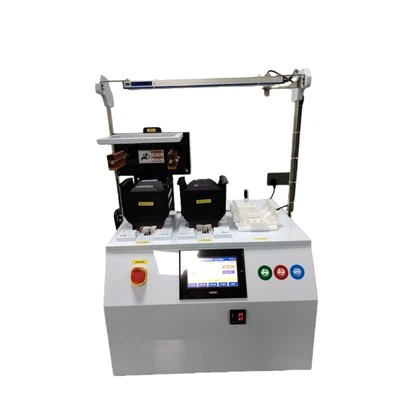
Test wafers are crucial components in the semiconductor industry, serving as a platform for testing and validating the performance of semiconductor devices. Ensuring the cleanliness of test wafers is essential to obtain accurate test results and maintain the quality of semiconductor products. As a test wafer supplier, I understand the significance of proper cleaning processes. In this blog, I will delve into the various methods used to clean test wafers.
Why Clean Test Wafers?
Before we explore the cleaning methods, it's important to understand why test wafers need to be cleaned. During the manufacturing and testing processes, test wafers can accumulate various contaminants such as particles, organic residues, metals, and oxides. These contaminants can interfere with the electrical properties of the wafer, leading to inaccurate test results and potentially affecting the performance of the semiconductor devices. Therefore, cleaning test wafers is necessary to remove these contaminants and ensure the reliability of the testing process.
Dry Cleaning Methods
Plasma Cleaning
Plasma cleaning is a widely used dry cleaning method for test wafers. It involves the use of a low-pressure plasma generated by an electrical discharge in a gas such as oxygen, argon, or nitrogen. The plasma contains highly reactive species such as ions, radicals, and electrons, which can react with the contaminants on the wafer surface and remove them.
The process begins by placing the test wafer in a plasma chamber. The chamber is then evacuated to a low pressure, and the appropriate gas is introduced. An electrical discharge is applied to generate the plasma. The reactive species in the plasma react with the contaminants, breaking them down into volatile compounds that can be pumped out of the chamber.

Plasma cleaning has several advantages. It is a non-contact cleaning method, which means it does not damage the wafer surface. It can also be used to clean complex geometries and hard-to-reach areas. Additionally, plasma cleaning is a relatively fast process and can be easily integrated into the semiconductor manufacturing process.
Laser Cleaning
Laser cleaning is another dry cleaning method that uses high-energy laser pulses to remove contaminants from the wafer surface. The laser energy is absorbed by the contaminants, causing them to vaporize or be ejected from the surface.
The process involves focusing a laser beam onto the wafer surface. The laser pulses are carefully controlled to ensure that only the contaminants are removed without damaging the wafer. Laser cleaning can be used to remove a wide range of contaminants, including particles, organic residues, and oxides.
One of the main advantages of laser cleaning is its high precision. It can selectively remove contaminants from specific areas of the wafer without affecting the surrounding areas. Laser cleaning is also a non-contact method, which reduces the risk of damage to the wafer. However, laser cleaning equipment can be expensive, and the process may require careful calibration to ensure optimal results.
Wet Cleaning Methods
RCA Cleaning
RCA cleaning is a well-established wet cleaning method that was developed by the Radio Corporation of America in the 1960s. It consists of two main steps: the Standard Clean 1 (SC-1) and the Standard Clean 2 (SC-2).
The SC-1 solution is a mixture of ammonium hydroxide (NH₄OH), hydrogen peroxide (H₂O₂), and deionized water (DIW). It is used to remove organic contaminants and particles from the wafer surface. The SC-1 solution works by oxidizing the organic contaminants and creating a hydrophilic surface that helps to remove particles.
The SC-2 solution is a mixture of hydrochloric acid (HCl), hydrogen peroxide (H₂O₂), and deionized water. It is used to remove metal contaminants from the wafer surface. The SC-2 solution works by forming metal complexes that can be easily removed from the wafer.
RCA cleaning is a very effective method for removing a wide range of contaminants from test wafers. However, it requires the use of strong chemicals, which can be hazardous to handle. Additionally, the process can be time-consuming and may require multiple rinsing steps to remove the chemicals from the wafer.
Megasonic Cleaning
Megasonic cleaning is a wet cleaning method that uses high-frequency sound waves in the megahertz range to remove contaminants from the wafer surface. The sound waves create tiny bubbles in the cleaning solution, which collapse and generate high-pressure shock waves. These shock waves can dislodge and remove contaminants from the wafer surface.
The process involves immersing the test wafer in a cleaning solution and applying megasonic energy. The cleaning solution can be a mixture of chemicals and deionized water, depending on the type of contaminants to be removed. Megasonic cleaning can be used to remove particles, organic residues, and some types of oxides.
One of the advantages of megasonic cleaning is its ability to clean small particles and contaminants from the wafer surface. It is also a relatively gentle cleaning method, which reduces the risk of damage to the wafer. However, megasonic cleaning may not be effective for removing strongly adhered contaminants, and the process may require careful optimization to ensure optimal results.
Choosing the Right Cleaning Method
The choice of cleaning method depends on several factors, including the type and level of contaminants, the wafer material, and the manufacturing process requirements. In some cases, a combination of cleaning methods may be used to achieve the best results.
As a test wafer supplier, I work closely with my customers to understand their specific cleaning needs. I can provide advice on the most suitable cleaning methods based on the characteristics of the test wafers and the testing requirements. I also offer cleaning services using state-of-the-art equipment and processes to ensure the highest quality of test wafers.
Conclusion
Cleaning test wafers is a critical step in the semiconductor manufacturing process. By using the appropriate cleaning methods, we can ensure the accuracy of test results and the quality of semiconductor products. Whether it's dry cleaning methods such as plasma cleaning and laser cleaning or wet cleaning methods such as RCA cleaning and megasonic cleaning, each method has its own advantages and limitations.
At our company, we are committed to providing high-quality test wafers that meet the strictest industry standards. We understand the importance of clean test wafers and have invested in the latest cleaning technology and expertise. If you are in the market for test wafers or need advice on wafer cleaning, please reach out to us for procurement discussions. We would be delighted to assist you in finding the best solutions for your semiconductor testing needs.
References
- Smith, J. (2018). Semiconductor Wafer Cleaning Technology. Springer.
- Jones, A. (2020). Plasma Cleaning in Semiconductor Manufacturing. Journal of Vacuum Science and Technology.
- Brown, C. (2019). Laser Cleaning for Semiconductor Applications. Applied Physics Letters.