Hey there! I'm a supplier of wafer handling systems, and today I want to chat about how these nifty systems communicate with the production control system. It's a topic that's super important in the semiconductor industry, and I'm stoked to share my insights with you.
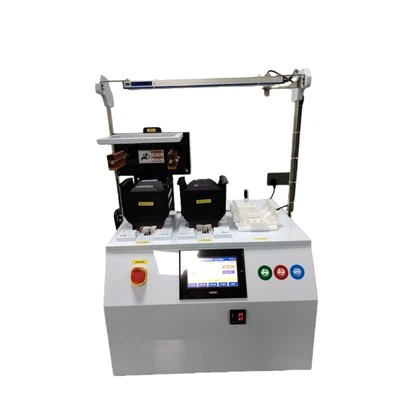
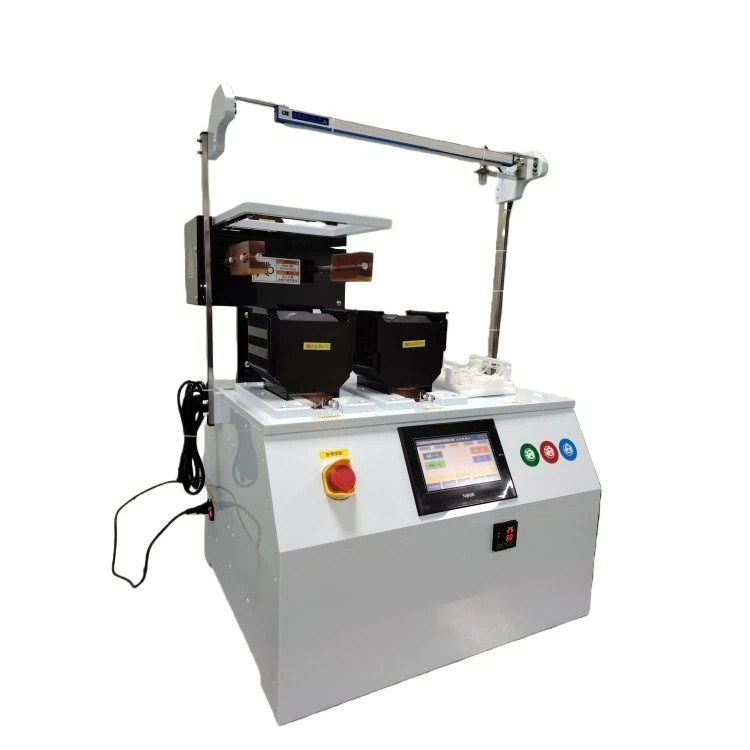
First off, let's quickly go over what wafer handling systems are. These are the machines that move wafers around in a semiconductor fabrication facility. They're responsible for picking up wafers from one place, transporting them to another, and placing them down safely. One of the cool products in this category is the Wafer Guide Machine, which helps in guiding the wafers accurately during the handling process.
Now, onto the main question: how do these wafer handling systems communicate with the production control system? Well, there are a few different ways, and I'll break them down for you.
1. Ethernet Communication
Ethernet is one of the most common ways for wafer handling systems to talk to the production control system. It's fast, reliable, and widely used in industrial settings. With Ethernet, the wafer handling system can send and receive data packets to and from the production control system.
For example, the wafer handling system can send information about its current status, like whether it's idle, in the middle of a pick-and-place operation, or if there's an error. The production control system can then use this information to make decisions about what tasks to assign to the wafer handling system next.
On the flip side, the production control system can send commands to the wafer handling system via Ethernet. These commands could include instructions to move a wafer from one location to another, change the speed of the handling process, or perform a calibration routine.
The great thing about Ethernet is that it allows for high - speed data transfer. This is crucial because in a semiconductor fabrication facility, time is of the essence. The faster the communication, the more efficient the overall production process.
2. Serial Communication
Serial communication is another option. It's a bit older - school compared to Ethernet, but it still has its uses. In serial communication, data is sent one bit at a time over a single communication line.
This method is often used when the distance between the wafer handling system and the production control system is relatively short. It's also useful when the amount of data that needs to be transferred is not extremely large.
For instance, if the wafer handling system only needs to send simple status updates, like "ready" or "not ready," serial communication can do the job just fine. It's also less complex and cheaper to implement compared to Ethernet, which can be a plus for some smaller facilities or systems.
3. Fieldbus Communication
Fieldbus is a type of industrial network protocol that's designed for communication between different devices in a factory environment. There are several different types of fieldbus protocols, such as Profibus, CANopen, and DeviceNet.
For wafer handling systems, fieldbus communication can be used to connect them to the production control system as well as other devices in the production line. It allows for real - time communication and can handle a variety of data types.
For example, a fieldbus network can be used to connect multiple wafer handling systems together and to the production control system. This way, the production control system can monitor and control all the wafer handling systems as a group. It can also receive data from other sensors and devices in the production line, like temperature sensors or pressure sensors, and use this information to optimize the operation of the wafer handling systems.
Challenges in Communication
Of course, communicating between wafer handling systems and the production control system isn't always a walk in the park. There are a few challenges that need to be addressed.
One of the biggest challenges is ensuring data integrity. In a semiconductor fabrication facility, there's a lot of electrical noise and interference. This can cause data packets to get corrupted during transmission, which can lead to errors in the operation of the wafer handling system.
To combat this, various error - correction techniques are used. For example, cyclic redundancy check (CRC) is a common method for detecting errors in data packets. The wafer handling system and the production control system can use CRC to verify that the data they're receiving is correct.
Another challenge is compatibility. There are many different types of wafer handling systems and production control systems on the market, each with their own communication protocols and interfaces. Making sure that these systems can communicate with each other seamlessly can be a headache.
To deal with this, standards are being developed in the industry. For example, the SEMI (Semiconductor Equipment and Materials International) organization has created standards for communication between semiconductor equipment and the production control system. By following these standards, manufacturers can ensure that their wafer handling systems are more likely to be compatible with different production control systems.
The Future of Communication
The future of communication between wafer handling systems and the production control system looks pretty exciting. With the rise of the Internet of Things (IoT) and Industry 4.0, we can expect to see even more advanced communication methods.
For example, wireless communication technologies like Wi - Fi and Bluetooth could become more widely used. This would allow for greater flexibility in the placement of wafer handling systems and the production control system. It would also make it easier to retrofit existing systems with new communication capabilities.
Artificial intelligence and machine learning are also likely to play a big role. The production control system could use AI algorithms to analyze the data received from the wafer handling systems and make more intelligent decisions. For example, it could predict when a wafer handling system is likely to experience a failure and schedule maintenance in advance.
Why Choose Our Wafer Handling Systems?
As a supplier of wafer handling systems, we've put a lot of effort into making sure that our systems communicate effectively with the production control system. Our systems support multiple communication methods, including Ethernet, serial, and fieldbus, so you can choose the one that best suits your needs.
We also pay close attention to data integrity and compatibility. Our systems are designed to be robust and reliable, even in the harsh environment of a semiconductor fabrication facility. And we're constantly working on improving our products to keep up with the latest industry trends.
If you're in the market for wafer handling systems and are looking for a reliable partner, I'd love to have a chat with you. Whether you're setting up a new production line or upgrading an existing one, we can provide you with the right solutions to meet your requirements.
So, if you're interested in learning more about our wafer handling systems and how they can communicate with your production control system, don't hesitate to reach out. Let's work together to take your semiconductor production to the next level.

References
- SEMI Standards, Semiconductor Equipment and Materials International
- Industrial Communication Technologies: Ethernet, Serial, and Fieldbus - Various Industry Publications
- Internet of Things in Manufacturing: Trends and Technologies - Research Papers on Industry 4.0