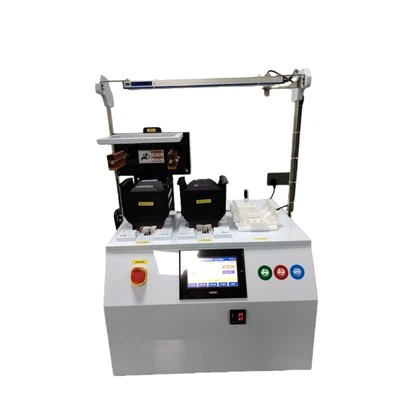
Hey there! As a supplier of LPCVD Equipment, I often get asked about the pressure range in these machines. So, I thought I'd sit down and write a blog post to share some insights on this topic.


Let's start with a quick intro. LPCVD, or Low-Pressure Chemical Vapor Deposition, is a key process in semiconductor manufacturing and other high-tech industries. It's used to deposit thin films on substrates, which is crucial for making things like microchips, solar cells, and MEMS devices. The pressure in an LPCVD system plays a vital role in how the deposition process works.
Understanding the Basics of Pressure in LPCVD
In an LPCVD equipment, the pressure is kept at a relatively low level compared to atmospheric pressure. Why? Well, low pressure helps to control the chemical reactions that take place during the deposition. When the pressure is low, the gas molecules in the chamber have more space to move around. This reduces the chances of unwanted collisions between molecules, which can lead to inconsistent film growth.
The typical pressure range in LPCVD equipment is between 0.1 to 10 Torr. That's a pretty wide range, and the exact pressure used depends on several factors.
Factors Affecting the Pressure Range
Type of Film Being Deposited
Different materials require different deposition conditions. For example, if you're depositing silicon nitride, you might use a pressure around 0.5 to 2 Torr. This pressure allows for the proper reaction between the precursor gases (usually silane and ammonia) to form a high-quality silicon nitride film. On the other hand, if you're depositing polysilicon, a pressure of 1 to 5 Torr might be more appropriate.
Deposition Rate
The pressure also affects how fast the film is deposited. Higher pressures generally result in faster deposition rates. However, if the pressure is too high, the film quality can suffer. So, it's a bit of a balancing act. You want to find the sweet spot where you can get a good deposition rate without sacrificing the quality of the film.
Substrate Temperature
The temperature of the substrate also plays a role in determining the optimal pressure. Higher temperatures can sometimes allow for lower pressures because the chemical reactions are more likely to occur at elevated temperatures. For instance, if you're working with a substrate that can withstand high temperatures, you might be able to use a lower pressure in the LPCVD process.
Benefits of Operating in the Right Pressure Range
Uniform Film Growth
One of the main benefits of using the correct pressure range is that it leads to uniform film growth. When the pressure is within the optimal range, the gas molecules are evenly distributed around the substrate. This ensures that the film is deposited evenly across the surface, which is crucial for the performance of the final product.
High-Quality Films
Operating in the right pressure range also helps to produce high-quality films. The films have better adhesion to the substrate, fewer defects, and more consistent properties. This is especially important in applications where the film's performance is critical, such as in semiconductor devices.
Process Repeatability
Another advantage is process repeatability. When you have a well-defined pressure range, you can reproduce the same deposition results time and time again. This is essential for mass production, where consistency is key.
Comparing with Other CVD Technologies
It's worth comparing LPCVD with other Chemical Vapor Deposition technologies, like PECVD Equipment and ICP-CVD System.
PECVD, or Plasma-Enhanced Chemical Vapor Deposition, operates at a wider pressure range, typically from a few mTorr to a few Torr. The use of plasma in PECVD allows for deposition at lower temperatures compared to LPCVD. However, the film quality in PECVD might not be as high as in LPCVD in some cases.
ICP-CVD, or Inductively Coupled Plasma Chemical Vapor Deposition, is another technology. It can operate at relatively low pressures, similar to LPCVD. However, ICP-CVD uses an inductively coupled plasma to enhance the deposition process, which can lead to different film properties and deposition rates.
Our LPCVD Equipment
At our company, we offer LPCVD Equipment that is designed to operate within the optimal pressure range. Our machines are equipped with advanced pressure control systems that allow for precise adjustment of the pressure. This ensures that you can achieve the best possible results for your specific application.
We also provide excellent technical support to help you set up and optimize the pressure in your LPCVD process. Whether you're a small research lab or a large manufacturing facility, our team is here to assist you.
Conclusion
In conclusion, the pressure range in LPCVD equipment is a critical factor in the deposition process. The typical range of 0.1 to 10 Torr allows for precise control of the chemical reactions and ensures high-quality film growth. By understanding the factors that affect the pressure range and operating within the optimal range, you can achieve uniform film growth, high-quality films, and process repeatability.
If you're in the market for LPCVD equipment or have any questions about the pressure range or the deposition process, don't hesitate to reach out. We'd be happy to have a chat and discuss how our equipment can meet your needs. Let's work together to take your thin-film deposition process to the next level!
References
- "Principles of Chemical Vapor Deposition" by John F. McDonald
- "Semiconductor Manufacturing Technology" by Steven Wolf