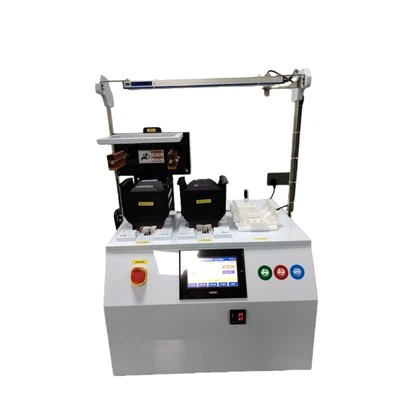
Hey there! As a supplier of etching machines, I often get asked about the temperature control range during the etching process. It's a crucial factor that can significantly impact the quality and efficiency of the etching. So, let's dive right into it.
Why Temperature Matters in Etching
Etching is a process where a material is selectively removed from a substrate using a chemical or physical method. The temperature plays a vital role in this process because it affects the reaction rate between the etchant and the material being etched. If the temperature is too low, the reaction might be too slow, leading to longer etching times and potentially uneven results. On the other hand, if the temperature is too high, the reaction can be too rapid, causing over - etching, rough surfaces, and even damage to the substrate.
General Temperature Control Ranges
The temperature control range of an etching machine can vary depending on the type of etching process and the materials involved.
Wet Etching
In wet etching, which uses liquid etchants, the temperature usually ranges from around 20°C to 80°C. For example, when etching silicon using a hydrofluoric acid (HF) - based solution, a temperature of around 25°C to 30°C is often used for a controlled and relatively slow etching process. This allows for better precision and uniformity. However, if you want to increase the etching rate, you can raise the temperature up to 60°C or 80°C. But be careful, as higher temperatures can also increase the risk of under - cutting and other defects.


Dry Etching
Dry etching, which uses plasma or gaseous etchants, typically operates at a wider temperature range. The lower end can be around 0°C, and the upper end can go up to 200°C or even higher in some cases. For instance, in reactive ion etching (RIE), which is a common dry - etching technique, the temperature is often controlled between 50°C and 150°C. This temperature range helps to maintain the stability of the plasma and the chemical reactions involved in the etching process.
Temperature Control in Different Types of Etching Machines
Now, let's take a look at how different types of etching machines handle temperature control.
6" CCP Etcher
The 6" CCP (Capacitively Coupled Plasma) Etcher is designed for precise etching of small - sized substrates. It has a temperature control range that typically spans from 20°C to 120°C. This range allows for a variety of etching processes, from gentle surface cleaning to more aggressive material removal. The machine uses advanced cooling and heating systems to maintain a stable temperature throughout the etching process, ensuring consistent results.
Silicon Etching System
A silicon etching system is specifically designed for etching silicon wafers. The temperature control range for this type of machine is usually between 25°C and 80°C. Since silicon is a widely used material in the semiconductor industry, precise temperature control is essential to achieve high - quality etching. The system can be adjusted to different temperatures depending on the specific requirements of the etching process, such as the desired etch rate and the pattern to be etched.
8" ICP Etcher
The 8" ICP (Inductively Coupled Plasma) Etcher is suitable for larger substrates. It has a relatively wide temperature control range, from 0°C to 200°C. The ability to operate at low temperatures is useful for processes that require minimal thermal stress on the substrate, while the higher temperature range allows for faster etching rates when needed. The ICP etcher uses sophisticated temperature sensors and controllers to ensure accurate temperature regulation.
RIE Etcher
As mentioned earlier, the RIE Etcher is a popular dry - etching machine. Its temperature control range is typically between 50°C and 150°C. This range is optimized for the chemical reactions that occur in the plasma during the etching process. The machine can be fine - tuned to different temperatures to achieve the best balance between etch rate, selectivity, and surface quality.
Cu And Ti Etcher
When it comes to etching copper (Cu) and titanium (Ti), the temperature control range is usually between 30°C and 100°C. These metals have different etching characteristics, and the temperature needs to be carefully controlled to ensure proper etching. For example, copper etching might require a slightly lower temperature compared to titanium etching to avoid over - etching and to maintain a smooth surface finish.
Factors Affecting Temperature Control
There are several factors that can affect the temperature control in an etching machine.
- Etchant Properties: Different etchants have different reaction rates and temperature sensitivities. For example, some etchants might require a specific temperature range to work effectively.
- Substrate Material: The type of substrate being etched can also influence the temperature control. Some materials are more sensitive to temperature changes than others, and the temperature needs to be adjusted accordingly to prevent damage.
- Etching Rate Requirements: If you need a high etching rate, you might need to increase the temperature. However, this needs to be balanced with the quality of the etching.
- Cooling and Heating Systems: The efficiency of the cooling and heating systems in the etching machine is crucial for maintaining a stable temperature. A well - designed system can quickly adjust the temperature and compensate for any heat generated during the etching process.
Importance of Precise Temperature Control
Precise temperature control is essential for several reasons.
- Quality: It ensures that the etching process is consistent and produces high - quality results. A stable temperature helps to avoid defects such as under - cutting, rough surfaces, and uneven etching.
- Repeatability: When the temperature is accurately controlled, the etching process can be repeated with the same results. This is important for mass production and for ensuring the reliability of the final products.
- Safety: Controlling the temperature within a safe range helps to prevent over - heating and potential hazards, such as chemical reactions that could be dangerous.
Contact Us for Your Etching Machine Needs
If you're in the market for an etching machine and want to learn more about temperature control and other features, don't hesitate to reach out. We're here to help you find the right etching machine for your specific requirements. Whether you need a small - scale machine for research or a large - scale production system, we've got you covered.
References
- Smith, J. (2018). "Advanced Etching Techniques and Temperature Control". Journal of Semiconductor Manufacturing.
- Johnson, A. (2019). "Temperature Optimization in Etching Processes". Proceedings of the International Conference on Microfabrication.
- Brown, K. (2020). "Etching Machine Design and Temperature Management". Semiconductor Industry Review.