Hey there! As a packaging equipment supplier, I've seen firsthand the growing demand for higher automation levels in the industry. In today's fast - paced market, businesses are constantly looking for ways to increase efficiency, reduce costs, and improve product quality. So, let's dive into how we can improve the automation level of packaging equipment.
1. Understanding the Basics of Automation in Packaging
First off, it's important to know what automation in packaging means. Simply put, it's the use of technology to perform packaging tasks with minimal human intervention. This can range from simple tasks like filling and sealing to more complex operations such as sorting and labeling.
Automation brings a whole bunch of benefits. For one, it boosts productivity. Machines can work nonstop, 24/7, without getting tired, which means more products can be packaged in a shorter amount of time. It also improves accuracy. Human errors are inevitable, but automated systems can perform tasks with a high degree of precision, ensuring that each package is consistent. And let's not forget about cost savings. Over time, the investment in automation can pay off big time by reducing labor costs and minimizing waste.
2. Upgrading Existing Equipment
If you already have packaging equipment, upgrading it can be a great way to increase automation. One of the first steps is to install sensors. Sensors can detect various parameters such as the presence of a product, its size, and its position. For example, an optical sensor can detect if a package is properly aligned before it goes through the sealing process. This helps to prevent errors and ensures smooth operation.
Another option is to add programmable logic controllers (PLCs). PLCs are like the brains of the packaging equipment. They can be programmed to control different functions of the machine, such as the speed of the conveyor belt, the amount of product being filled, and the timing of the sealing process. With a PLC, you can easily adjust the settings of the equipment based on your specific needs.
3. Implementing Advanced Technologies
There are some really cool advanced technologies that can take the automation level of packaging equipment to the next level. One of them is robotics. Robots can perform a wide range of packaging tasks, from picking and placing products to palletizing. They are highly flexible and can be programmed to handle different types of products and packaging formats. For instance, a robotic arm can pick up individual items from a conveyor belt and place them into a box with great precision.
Artificial intelligence (AI) is also making its mark in the packaging industry. AI-powered systems can analyze data from sensors and cameras to make real-time decisions. For example, an AI system can detect defects in products or packaging and automatically reject them. This helps to improve the quality of the final product and reduces the need for manual inspection.
4. Laser Sealing Welding Machine
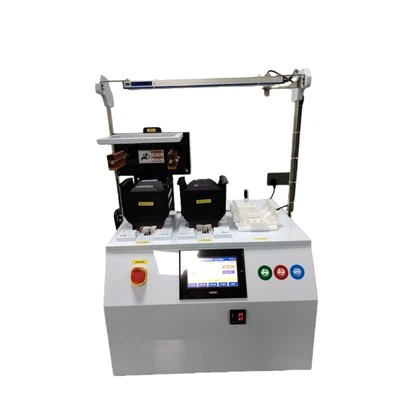
One piece of equipment that can significantly improve the automation level of packaging is the Laser Sealing Welding Machine. This machine uses laser technology to seal and weld packages. It offers several advantages over traditional sealing methods.
First, it provides a high-quality seal. The laser can precisely control the heat and energy, ensuring a strong and reliable seal. This is especially important for products that require airtight or moisture-proof packaging. Second, it's very fast. Laser sealing can be done in a fraction of the time compared to other methods, which means higher productivity. Third, it's a non-contact method. This reduces the risk of damage to the product or the packaging, and it also allows for sealing of irregularly shaped packages.
5. Integration and Communication
To fully realize the benefits of automation, it's crucial to integrate all the packaging equipment and ensure smooth communication between them. This can be achieved through the use of industrial Ethernet or other communication protocols. When all the machines are connected, they can share data and work together seamlessly.
For example, the filling machine can communicate with the sealing machine to ensure that the right amount of product is filled before sealing. The sorting machine can send information to the labeling machine about the type of product and its destination. This integration helps to streamline the entire packaging process and reduces the chances of errors.
6. Staff Training
Even with the most advanced automation equipment, the role of the staff is still important. They need to be trained to operate, maintain, and troubleshoot the equipment. Training programs should cover not only the technical aspects of the machines but also the safety procedures.
When employees are well-trained, they can make the most of the automation features and ensure that the equipment runs smoothly. They can also quickly identify and solve any problems that may arise, minimizing downtime.
7. Continuous Improvement
The journey to improving the automation level of packaging equipment doesn't end with the initial implementation. It's an ongoing process. Regularly review the performance of the equipment and look for areas where it can be further optimized.
Collect data on key performance indicators such as productivity, quality, and downtime. Analyze this data to identify trends and patterns. Based on the analysis, make adjustments to the equipment settings, upgrade the software, or introduce new technologies.

Contact for Purchase and Negotiation
If you're interested in improving the automation level of your packaging equipment, we're here to help. We have a wide range of packaging equipment and solutions that can meet your specific needs. Whether you're looking to upgrade your existing equipment or invest in new automated systems, we can provide you with the right advice and products. Get in touch with us to start the purchase and negotiation process.
References
- Smith, J. (2020). Automation in the Packaging Industry. Packaging Today.
- Brown, A. (2021). Advanced Technologies for Packaging Equipment. Industrial Automation Journal.