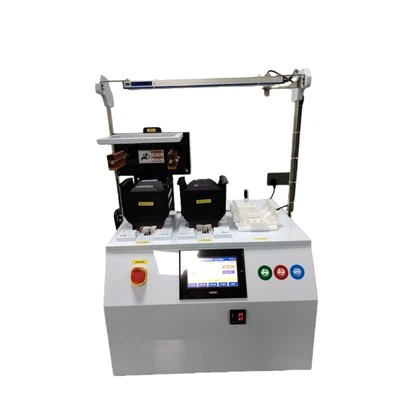
As a leading supplier of environmental test chambers, I am often asked about how these sophisticated devices simulate vibration. Vibration testing is a crucial aspect of product development and quality control, especially for items that will be exposed to mechanical stresses during their lifespan. In this blog post, I will delve into the mechanisms and technologies behind vibration simulation in environmental test chambers, providing insights into how we at our company ensure accurate and reliable testing results.
The Importance of Vibration Testing
Before we explore the simulation methods, it's essential to understand why vibration testing is so important. Many products, from automotive components and aerospace parts to consumer electronics and industrial machinery, are subjected to various types of vibrations during their normal operation or transportation. These vibrations can cause mechanical fatigue, loosening of parts, electrical failures, and other issues that may compromise the performance and reliability of the product.
By simulating these vibrations in a controlled environment, manufacturers can identify potential weaknesses in their designs and make necessary improvements before the product reaches the market. This not only helps to enhance the quality and durability of the product but also reduces the risk of costly recalls and warranty claims.
Types of Vibration
There are several types of vibration that can be simulated in environmental test chambers, each with its own characteristics and applications. The most common types include:
- Sinusoidal Vibration: This is the simplest form of vibration, where the motion is a single-frequency sine wave. Sinusoidal vibration is often used to test the response of a product to a specific frequency or to simulate the vibration experienced during transportation on a smooth road.
- Random Vibration: Random vibration consists of a complex mixture of frequencies that vary randomly over time. It is used to simulate the real-world vibrations that a product may encounter, such as those caused by wind, engine noise, or rough terrain.
- Shock Vibration: Shock vibration is a sudden, high-intensity impulse that can cause significant damage to a product. It is used to test the ability of a product to withstand sudden impacts, such as those that may occur during handling or shipping.
Vibration Simulation Mechanisms
To simulate these different types of vibration, environmental test chambers are equipped with various mechanisms and technologies. The most common methods include:


- Electrodynamic Shakers: Electrodynamic shakers are the most widely used type of vibration simulator in environmental test chambers. They work by using an electromagnetic field to generate a force that moves a table or platform on which the test specimen is placed. The frequency and amplitude of the vibration can be precisely controlled by adjusting the electrical current supplied to the shaker.
- Hydraulic Shakers: Hydraulic shakers use a hydraulic system to generate the vibration. They are capable of producing high forces and large displacements, making them suitable for testing large and heavy specimens. However, they are also more expensive and require more maintenance than electrodynamic shakers.
- Mechanical Shakers: Mechanical shakers use a mechanical mechanism, such as a cam or a crankshaft, to generate the vibration. They are relatively simple and inexpensive, but they are limited in terms of the frequency range and amplitude that they can produce.
Integration with Environmental Conditions
In addition to simulating vibration, environmental test chambers can also simulate other environmental conditions, such as temperature, humidity, and altitude. This allows manufacturers to test the performance of their products under a wide range of real-world conditions.
For example, a product that is designed to operate in a hot and humid environment may be tested in a Walk-in Temperature and Humidity Chamber while being subjected to vibration. This helps to ensure that the product will perform reliably under the combined effects of these environmental factors.
Similarly, a product that is designed to withstand rapid temperature changes may be tested in a Rapid Temperature Change Test Chamber while being vibrated. This helps to identify any potential issues that may arise due to thermal expansion and contraction.
Thermal Shock and Vibration
Thermal shock is another important environmental factor that can affect the performance of a product. It occurs when a product is exposed to rapid changes in temperature, which can cause thermal stress and damage to the materials and components.
To simulate thermal shock in combination with vibration, environmental test chambers are equipped with Thermal Shock Test Chambers. These chambers are designed to rapidly transfer the test specimen between two different temperature zones, simulating the thermal shock that may occur during operation or transportation.
By subjecting the product to thermal shock while being vibrated, manufacturers can test the ability of the product to withstand the combined effects of these environmental factors. This helps to ensure that the product will perform reliably under the most demanding conditions.
Quality Control and Calibration
To ensure the accuracy and reliability of vibration testing, it is essential to have a rigorous quality control and calibration program in place. At our company, we use state-of-the-art equipment and techniques to calibrate our environmental test chambers and vibration simulators regularly.
We also perform comprehensive testing and validation procedures to ensure that the test results are accurate and repeatable. This includes using reference standards and traceable measurement systems to verify the performance of the equipment and to ensure that it meets the relevant industry standards and regulations.
Conclusion
In conclusion, vibration simulation is a critical aspect of product development and quality control. By simulating the different types of vibration that a product may encounter in the real world, manufacturers can identify potential weaknesses in their designs and make necessary improvements before the product reaches the market.
As a leading supplier of environmental test chambers, we are committed to providing our customers with the highest quality products and services. Our environmental test chambers are equipped with the latest technologies and mechanisms to simulate vibration accurately and reliably, and we have a rigorous quality control and calibration program in place to ensure the accuracy and repeatability of the test results.
If you are interested in learning more about our environmental test chambers or would like to discuss your specific testing requirements, please do not hesitate to contact us. Our team of experts will be happy to assist you and provide you with the information and support you need to make an informed decision.
References
- ASTM International. (2021). Standard Guide for Vibration Testing of Electronic Equipment. ASTM E472-18.
- ISO. (2018). Environmental Testing - Part 2-6: Tests - Test Fc: Vibration, Sinusoidal. ISO 16750-3:2012.
- IEC. (2018). Environmental Testing - Part 2-64: Tests - Test Fh: Vibration, Broad-Band Random and Guidance. IEC 60068-2-64:2008.