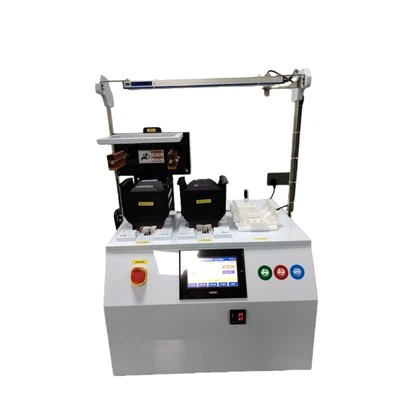
In the realm of semiconductor manufacturing and research, microscopes play a pivotal role in enabling scientists and engineers to observe and analyze semiconductor materials and devices at a microscopic level. Among the various components of a semiconductor microscope, the stability of the stage is a critical factor that significantly impacts the quality and accuracy of observations. As a leading semiconductor microscope supplier, we understand the importance of stage stability and its implications for semiconductor inspection and analysis. In this blog post, we will delve into the ways in which the stability of a semiconductor microscope's stage affects the observation process.
1. Precision in Positioning
One of the primary functions of a microscope stage is to hold the semiconductor sample in place and allow for precise positioning. In semiconductor applications, where the features of interest can be as small as a few nanometers, the ability to accurately position the sample is crucial. A stable stage ensures that the sample remains fixed in the desired position during observation, eliminating any unwanted movement that could cause blurring or misalignment of the image.
For example, when inspecting a semiconductor wafer using an Automated Wafer Inspection Microscope, the stage needs to move the wafer precisely to different locations for inspection. If the stage is not stable, even the slightest vibration or drift can cause the wafer to shift, resulting in inaccurate inspection results. A stable stage provides the necessary precision for high - resolution imaging and reliable defect detection.
2. Image Quality
The stability of the stage has a direct impact on the quality of the images obtained during observation. Unstable stages can introduce vibrations, which are transferred to the sample and the optical system of the microscope. These vibrations can cause blurring, distortion, and reduced contrast in the images, making it difficult to distinguish fine details of the semiconductor structure.
In a 3D Optical Profiler, which is used to measure the surface topography of semiconductor devices, stage stability is essential for accurate height measurements. Any movement of the stage during the scanning process can lead to errors in the 3D reconstruction of the surface, resulting in inaccurate profiling data. A stable stage minimizes these vibrations, allowing for sharp, clear, and high - quality images that are essential for detailed analysis of semiconductor materials and devices.
3. Long - term Observation
In many semiconductor research and manufacturing processes, long - term observation is required. For instance, when studying the growth of semiconductor crystals or the aging effects of semiconductor devices, continuous observation over an extended period is necessary. A stable stage is crucial for such long - term studies.
If the stage is unstable, it may gradually drift or vibrate over time, causing the sample to move out of the field of view or introducing artifacts in the images. This can disrupt the observation process and make it difficult to obtain reliable data. A stable stage maintains the position of the sample consistently, enabling uninterrupted long - term observation and ensuring the accuracy and reproducibility of the experimental results.
4. Compatibility with High - magnification Objectives
Semiconductor microscopes often use high - magnification objectives to observe the fine details of semiconductor structures. High - magnification objectives have a very narrow depth of field, which means that even a small movement of the sample can cause it to go out of focus. A stable stage is essential to keep the sample within the depth of field of the high - magnification objective.
When using a Microscope - Based Photoelectrical Analysis System with high - magnification objectives to study the photoelectric properties of semiconductor materials, the stage needs to be extremely stable. Any movement of the stage can lead to rapid changes in the focus, making it challenging to conduct accurate photoelectric measurements. A stable stage ensures that the sample remains in focus throughout the observation, allowing for precise analysis of the semiconductor's photoelectric characteristics.


5. Ease of Use
A stable stage also enhances the ease of use of the semiconductor microscope. When the stage is stable, operators can focus on the observation and analysis tasks without having to constantly adjust the position of the sample due to stage instability. This saves time and reduces operator fatigue, especially during long - term or repetitive observation tasks.
In addition, a stable stage simplifies the calibration process of the microscope. Since the stage does not introduce unwanted movements, it is easier to align the optical system and ensure the accuracy of the measurement. This improves the overall efficiency of the semiconductor inspection and analysis process.
How Our Semiconductor Microscopes Ensure Stage Stability
As a semiconductor microscope supplier, we have implemented several design features in our microscopes to ensure the stability of the stage. Our stages are made of high - quality materials with excellent mechanical properties, such as rigid metal alloys, which provide a solid foundation for the sample. We also use advanced damping technologies to minimize vibrations and isolate the stage from external disturbances.
In addition, our stages are equipped with precise motion control systems that can move the sample smoothly and accurately. These systems use high - resolution motors and encoders to ensure that the stage can be positioned with high precision. Moreover, our microscopes are designed with a robust frame and a well - balanced structure to further enhance the stability of the stage.
Conclusion
In conclusion, the stability of a semiconductor microscope's stage is a critical factor that affects every aspect of the observation process, from precision in positioning and image quality to long - term observation and compatibility with high - magnification objectives. As a semiconductor microscope supplier, we are committed to providing our customers with microscopes that have highly stable stages to meet the demanding requirements of semiconductor research and manufacturing.
If you are in the semiconductor industry and are looking for high - quality semiconductor microscopes with stable stages, we invite you to contact us for procurement and further discussions. Our team of experts is ready to assist you in finding the most suitable microscope for your specific needs.
References
- Smith, J. (2018). Semiconductor Microscopy Techniques. New York: Academic Press.
- Jones, A. (2019). Advanced Microscope Design for Semiconductor Applications. London: Wiley.
- Brown, C. (2020). The Impact of Stage Stability on Microscopic Observation in Semiconductor Manufacturing. Journal of Semiconductor Research, 15(2), 45 - 52.