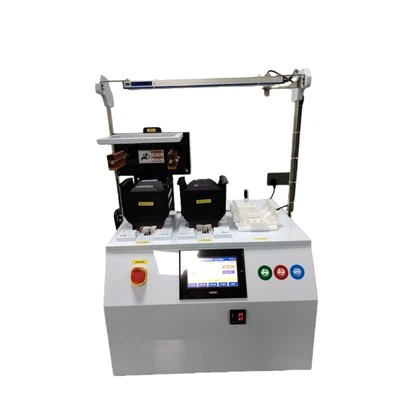
Hey there! As a supplier of LPCVD (Low-Pressure Chemical Vapor Deposition) equipment, I often get asked about how long the deposition process in LPCVD equipment usually takes. It's a great question, and the answer isn't as straightforward as you might think. In this blog post, I'll break down the factors that influence the deposition time and give you a better idea of what to expect.
Understanding the Basics of LPCVD
Before we dive into the deposition time, let's quickly go over what LPCVD is. LPCVD is a process used to deposit thin films on a substrate by introducing reactive gases into a chamber at low pressure. The gases react on the substrate surface, forming a solid film. This process is widely used in the semiconductor industry for applications such as creating insulation layers, diffusion barriers, and polysilicon gates.
Factors Affecting Deposition Time
The deposition time in LPCVD equipment can vary significantly depending on several factors. Here are the main ones:
1. Film Thickness
One of the most obvious factors is the desired thickness of the film. Naturally, the thicker the film you want to deposit, the longer the process will take. For example, if you're depositing a thin film of a few nanometers, the process might take only a few minutes. However, if you need a thicker film of several micrometers, it could take hours.
2. Deposition Rate
The deposition rate is another crucial factor. It's the speed at which the film is deposited on the substrate. The deposition rate depends on various factors, including the type of gases used, the temperature, and the pressure in the chamber. Different materials have different deposition rates. For instance, depositing silicon nitride might have a different rate compared to depositing polysilicon.
3. Substrate Type and Surface Area
The type of substrate and its surface area also play a role. Some substrates may require a pre-treatment step before deposition, which can add to the overall time. Additionally, a larger surface area will take longer to coat evenly compared to a smaller one.
4. Equipment Settings
The settings of the LPCVD equipment, such as the gas flow rates, temperature, and pressure, can significantly impact the deposition time. Optimizing these settings is crucial to achieving the desired film quality and thickness in the shortest possible time.
Typical Deposition Times
So, how long does the deposition process in LPCVD equipment usually take? Well, it can range from a few minutes to several hours. Here are some general estimates:
- Thin Films (less than 100 nm): For thin films, the deposition time can be as short as 5 - 15 minutes. These are often used for applications where a very thin layer is required, such as in some microelectronic devices.
- Medium-Thickness Films (100 nm - 1 µm): Depositing films in this thickness range typically takes around 30 minutes to 2 hours. This is common for applications like creating insulation layers in integrated circuits.
- Thick Films (greater than 1 µm): Thick films can take 2 - 8 hours or even longer to deposit. These are used in applications where a more substantial layer is needed, such as in some MEMS (Micro-Electro-Mechanical Systems) devices.
Comparing with Other CVD Technologies
It's worth mentioning how LPCVD compares to other Chemical Vapor Deposition (CVD) technologies in terms of deposition time. For example, Metal-Organic Chemical Vapor Deposition (MOCVD) is another popular CVD method. You can learn more about MOCVD and Industrial MOCVD System on our website.
- MOCVD: MOCVD is often used for depositing compound semiconductor materials, such as GaN (Gallium Nitride). You can check out our GaN-MOCVD and Standard MOCVD System pages for more details. The deposition time in MOCVD can also vary depending on the film thickness and material, but it can sometimes be faster than LPCVD for certain applications, especially when depositing high-quality epitaxial layers.
- ICP-CVD (Inductively Coupled Plasma Chemical Vapor Deposition): ICP-CVD is another option. You can find more information about our ICP-CVD System. This method uses a plasma to enhance the deposition process, which can sometimes lead to faster deposition rates compared to LPCVD, especially for certain types of films.
Optimizing Deposition Time
As a supplier of LPCVD equipment, we understand the importance of optimizing the deposition time. Here are some tips to help you reduce the deposition time without sacrificing the quality of the film:
- Optimize Equipment Settings: Work with our technical support team to fine-tune the gas flow rates, temperature, and pressure settings of the LPCVD equipment. This can help increase the deposition rate and reduce the overall time.
- Use High-Quality Gases: Using high-purity gases can improve the deposition rate and the quality of the film. Make sure to source your gases from reliable suppliers.
- Pre-Treat Substrates Efficiently: If pre-treatment is required, make sure to do it as efficiently as possible. This can save time and ensure a better quality film.
Conclusion
In conclusion, the deposition time in LPCVD equipment can vary widely depending on factors such as film thickness, deposition rate, substrate type, and equipment settings. While it can range from a few minutes to several hours, with the right optimization, you can achieve faster deposition times without compromising on quality.
If you're in the market for LPCVD equipment or have any questions about the deposition process, don't hesitate to reach out. We're here to help you find the best solution for your needs. Whether you're working on semiconductor manufacturing, MEMS devices, or other applications, our team of experts can provide you with the support and guidance you need. Let's start a conversation and see how we can work together to improve your deposition process.


References
- Smith, J. (2020). Chemical Vapor Deposition: Principles and Applications. New York: Wiley.
- Jones, A. (2019). Semiconductor Manufacturing Technology. Boston: Elsevier.