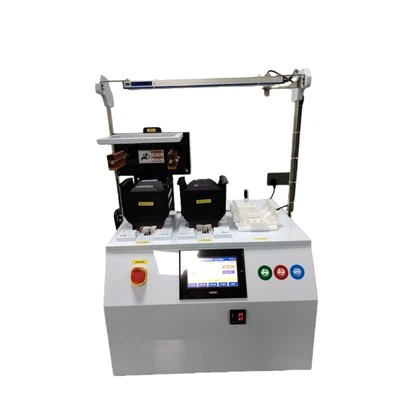
As a packaging equipment supplier, I understand the importance of ensuring that employees are well - trained to use our machinery effectively. Proper training not only enhances productivity but also reduces the risk of accidents and equipment damage. In this blog, I'll share some key strategies on how to train employees to use packaging equipment.
Pre - training Preparation
Before starting the actual training, it's crucial to conduct a comprehensive assessment of the employees' existing knowledge and skills. This can be done through a simple questionnaire or an on - the - spot demonstration. Based on the results, you can group the employees according to their proficiency levels, which allows for more targeted training.
Another important step is to set clear training objectives. These objectives should be specific, measurable, achievable, relevant, and time - bound (SMART). For example, an objective could be that within two weeks, employees should be able to operate the Laser Sealing Welding Machine safely and complete a certain number of packaging tasks per hour.
You also need to prepare all the necessary training materials, including user manuals, operation guides, safety instructions, and visual aids such as videos and diagrams. These materials should be easy to understand and accessible to all employees.
Theoretical Training
The first phase of the training is theoretical training. This is where you introduce the employees to the basic concepts of the packaging equipment. Start with an overview of the equipment's functions, components, and its role in the overall packaging process. Explain how different parts of the equipment work together to achieve the desired packaging results.
For instance, when training on the Laser Sealing Welding Machine, you can explain the principle of laser technology, how the laser beam is generated and focused, and how it seals and welds the packaging materials. Use visual aids like PowerPoint presentations or videos to make the learning process more engaging.
Safety is a top priority during theoretical training. Teach employees about all the potential hazards associated with the equipment, such as electrical shock, mechanical injuries, and laser radiation. Explain the safety features of the equipment, such as emergency stop buttons, safety guards, and interlocks. Make sure employees understand the importance of wearing appropriate personal protective equipment (PPE), such as safety glasses, gloves, and earplugs.
Hands - on Training
After the theoretical training, it's time for hands - on training. This is the most crucial part of the training process as it allows employees to apply what they have learned in a real - world setting.
Start with a supervised demonstration. Show the employees how to start and stop the equipment correctly, how to load and unload the packaging materials, and how to adjust the settings for different types of packaging tasks. During the demonstration, emphasize the correct operating procedures and safety precautions.
Then, let the employees practice under close supervision. Walk around the training area and provide immediate feedback and guidance. Encourage employees to ask questions and clarify any doubts they may have. As they gain more confidence, gradually increase the complexity of the tasks they are assigned.
It's important to provide multiple opportunities for practice. Set up a training schedule that allows employees to practice regularly over a period of time. This will help them develop muscle memory and improve their skills.
Troubleshooting Training
Even with proper operation, packaging equipment may encounter problems from time to time. Therefore, it's essential to train employees on basic troubleshooting skills.
Teach employees how to identify common problems, such as equipment jams, sensor malfunctions, and software errors. Provide them with a troubleshooting guide that lists the possible causes and solutions for each problem. Train them on how to perform basic maintenance tasks, such as cleaning, lubricating, and replacing worn - out parts.
During the troubleshooting training, conduct practical exercises where employees have to diagnose and solve simulated problems. This will help them develop the confidence and skills needed to handle real - world situations.
Continuous Training and Reinforcement
Training is not a one - time event. To ensure that employees maintain their skills and keep up with the latest technology, continuous training and reinforcement are necessary.
Organize regular refresher courses to review the key operating procedures and safety precautions. These courses can be short, but they should be frequent enough to keep the information fresh in the employees' minds.
Introduce new training programs whenever there are updates or improvements to the packaging equipment. For example, if a new software version is released for the Laser Sealing Welding Machine, provide training on how to use the new features.

Encourage employees to share their experiences and best practices with each other. This can be done through team meetings or online forums. By creating a culture of learning and sharing, you can enhance the overall performance of your workforce.
Measuring Training Effectiveness
To determine whether the training has been successful, you need to measure its effectiveness. There are several ways to do this.
One way is to conduct pre - and post - training assessments. Compare the employees' knowledge and skills before and after the training to see if there has been an improvement. You can use written tests, practical demonstrations, or on - the - job performance evaluations.
Another way is to collect feedback from the employees. Ask them about their training experience, what they liked, and what could be improved. Use this feedback to make adjustments to the training program.
You can also measure the impact of the training on the overall productivity and quality of the packaging process. Look at metrics such as the number of products packaged per hour, the defect rate, and the equipment downtime. If there is a significant improvement in these metrics, it indicates that the training has been effective.
Conclusion
Training employees to use packaging equipment is a complex but essential process. By following the strategies outlined in this blog, you can ensure that your employees are well - trained, safe, and productive. Remember, proper training not only benefits your employees but also your business in the long run.
If you are interested in our packaging equipment or need more information about our training programs, we welcome you to contact us for procurement discussions. We are committed to providing high - quality equipment and comprehensive training solutions to meet your packaging needs.
References
- "Packaging Machinery Handbook" by David W. Rosato
- "Safety in the Workplace: A Guide to Industrial Equipment Operation" by John Smith
- Industry reports on packaging equipment training and development