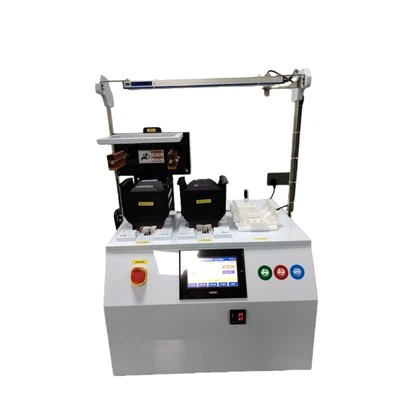
In the field of semiconductor manufacturing and microfabrication, Inductively Coupled Plasma (ICP) etching is a crucial process for creating precise patterns and structures on various materials. As a leading supplier of ICP Etchers, we understand the significance of achieving high - quality etching results. In this blog post, we will explore several key strategies and factors that can be employed to improve the etch quality in an ICP Etcher.
1. Understanding the ICP Etching Process
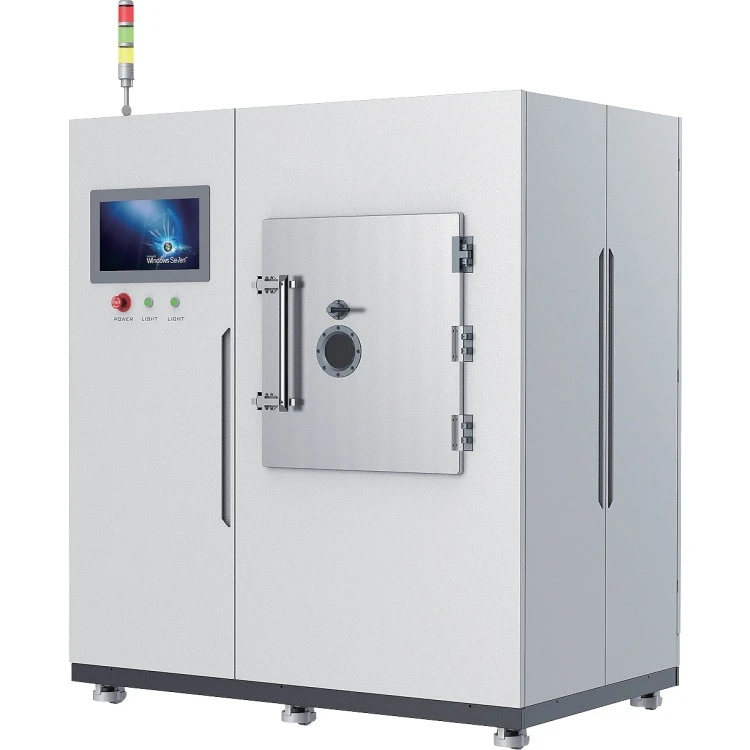
Before delving into the methods of improving etch quality, it is essential to have a basic understanding of how an ICP Etcher works. In an ICP Etcher, a radio - frequency (RF) power source is used to generate a plasma in a vacuum chamber. The plasma consists of ions, electrons, and reactive radicals, which interact with the surface of the substrate to remove material through physical and chemical processes. The inductive coupling of the RF power provides a high - density plasma, enabling high - rate etching.
2. Optimizing Process Parameters
2.1 Plasma Power
The plasma power is a critical parameter that affects both the etch rate and the etch quality. Higher plasma power generally leads to a higher etch rate, but it can also cause damage to the substrate and result in poor etch selectivity. A balance must be struck between achieving a high etch rate and maintaining good etch quality. For example, in silicon etching, a moderate plasma power can be used to ensure a smooth etch profile without over - heating the substrate. By carefully adjusting the plasma power, we can control the energy of the ions in the plasma, which in turn affects the etch rate and the surface morphology.

2.2 Gas Selection and Flow Rates
The choice of etching gases and their flow rates play a vital role in determining the etch quality. Different gases have different chemical properties and react differently with the substrate material. For instance, in the etching of silicon dioxide, gases such as CF₄ and CHF₃ are commonly used. CF₄ provides a high etch rate, while CHF₃ can improve the etch selectivity. The flow rates of these gases need to be optimized to achieve the desired etch rate, selectivity, and profile. Incorrect gas flow rates can lead to non - uniform etching, under - etching, or over - etching.
2.3 Pressure
The pressure inside the etching chamber also has a significant impact on the etch quality. At low pressures, the mean free path of the ions is longer, resulting in more directional etching. This is beneficial for achieving vertical etch profiles. On the other hand, higher pressures can increase the density of reactive species in the plasma, which may enhance the etch rate. However, high pressures can also cause increased scattering of ions, leading to less - precise etching. Therefore, the pressure should be carefully adjusted according to the specific requirements of the etching process.
3. Improving Substrate Preparation
3.1 Cleaning
Proper substrate cleaning is essential for ensuring uniform and high - quality etching. Any contaminants on the substrate surface, such as dust, organic residues, or metal impurities, can interfere with the etching process. For example, organic residues can react with the etching gases and form polymers on the substrate surface, which can prevent the etching of the underlying material. We recommend using a combination of wet and dry cleaning methods to thoroughly clean the substrates before etching.
3.2 Surface Activation
Surface activation can enhance the reactivity of the substrate surface, leading to better etch quality. This can be achieved through methods such as plasma pretreatment. Plasma pretreatment can remove the native oxide layer on the substrate surface and create active sites for the etching reaction. For example, in the etching of metals, plasma pretreatment can improve the adhesion between the metal and the etching gases, resulting in a more uniform etch.
4. Equipment Maintenance and Calibration
4.1 Regular Maintenance
Regular maintenance of the ICP Etcher is crucial for ensuring consistent etch quality. Components such as the plasma source, gas delivery system, and vacuum pump need to be inspected and maintained regularly. For example, the electrodes in the plasma source can wear out over time, which can affect the plasma distribution and the etch quality. By replacing worn - out components in a timely manner, we can prevent issues such as non - uniform etching and etch rate variations.
4.2 Calibration
Accurate calibration of the ICP Etcher is necessary to ensure that the process parameters are set correctly. This includes calibrating the plasma power, gas flow rates, and pressure sensors. Incorrect calibration can lead to significant variations in the etch quality. For example, if the gas flow rate sensor is not calibrated properly, the actual gas flow rate may be different from the set value, which can result in non - uniform etching or poor etch selectivity.
5. Advanced Techniques for Improved Etch Quality
5.1 Pulsed Plasma Etching
Pulsed plasma etching is an advanced technique that can improve the etch quality. In pulsed plasma etching, the plasma is turned on and off periodically. This allows for better control of the ion energy and the chemical reactions in the plasma. For example, during the off - time of the plasma, the substrate can cool down, reducing the risk of thermal damage. Pulsed plasma etching can also reduce the formation of polymers on the substrate surface, leading to a more uniform etch.
5.2 Mask Design and Materials
The mask used in the etching process is another important factor that affects the etch quality. A well - designed mask can ensure precise pattern transfer. The choice of mask materials is also crucial. For example, in some cases, silicon nitride masks can provide better etch selectivity compared to photoresist masks. By using high - quality mask materials and optimizing the mask design, we can improve the etch quality and the fidelity of the patterned structures.
6. Applications and Our Product Offerings
Our ICP Etchers are designed to meet the diverse needs of semiconductor manufacturing, microelectromechanical systems (MEMS) fabrication, and other related industries. We offer a range of products, including the Metal Etching System, which is specifically optimized for the etching of metals. This system provides high etch rates and excellent etch selectivity for various metal materials.
Our Ion Beam Etching Equipment offers precise control over the etching process, making it suitable for applications that require high - accuracy pattern transfer. It can achieve very narrow etch profiles with minimal damage to the substrate.
For the etching of copper and titanium, our Cu And Ti Etcher is an ideal choice. It is designed to provide uniform etching of these materials, ensuring high - quality results in semiconductor and microfabrication processes.
7. Conclusion and Call to Action
In conclusion, improving the etch quality in an ICP Etcher requires a comprehensive approach that includes optimizing process parameters, improving substrate preparation, maintaining and calibrating the equipment, and using advanced techniques. As a trusted supplier of ICP Etchers, we are committed to providing our customers with high - quality products and technical support to help them achieve the best possible etch results.
If you are interested in learning more about our ICP Etchers or have specific requirements for your etching processes, please feel free to contact us. Our team of experts is ready to assist you in selecting the most suitable equipment and optimizing your etching processes. We look forward to the opportunity to work with you and contribute to the success of your projects.
References
- Smith, J. (2018). Principles of Plasma Etching. Wiley.
- Jones, A. (2020). Advanced Techniques in Semiconductor Etching. Springer.
- Brown, C. (2019). Microfabrication Processes: A Practical Guide. Elsevier.