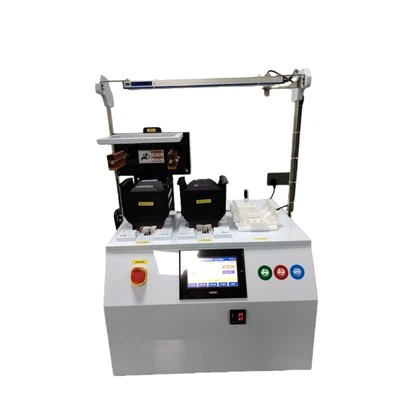
Hey there! As a supplier of lithography machines, I've seen firsthand the ins and outs of these high - tech marvels. Operating a lithography machine is no walk in the park. It requires a unique set of skills that blend technical know - how, problem - solving abilities, and a good dose of patience. Let's dive into what it really takes to run these complex machines effectively.
Technical Knowledge
First off, you gotta have a solid foundation in technical knowledge. Understanding the basic principles of lithography is crucial. Lithography is all about transferring a pattern from a mask or reticle onto a semiconductor wafer. You need to know how light interacts with the photoresist on the wafer. This involves knowledge of optics, as the lithography machine uses light sources like lasers or mercury lamps to expose the photoresist.
For example, different wavelengths of light can have different effects on the photoresist. Shorter wavelengths can offer higher resolution, but they also come with their own set of challenges, such as more complex optical systems. You should be familiar with concepts like numerical aperture, which determines the resolution and depth of focus of the lithography system.
Knowledge of semiconductor materials is also essential. You need to understand how the wafer material, usually silicon, reacts to the lithography process. Different doping levels and crystal orientations can affect the final outcome of the pattern transfer. And don't forget about the photoresist itself. You have to know its properties, like its sensitivity to light, its development characteristics, and how it adheres to the wafer.


Equipment Operation Skills
Once you've got the technical knowledge down, you need to be able to operate the lithography machine itself. This means getting familiar with all the buttons, knobs, and software interfaces. You'll be setting up the machine for each specific job, which includes things like aligning the mask or reticle with the wafer. Precise alignment is critical; even the slightest misalignment can lead to defective chips.
Loading and unloading the wafers properly is another key skill. You have to handle these delicate wafers with care to avoid any scratches or contamination. And you need to know how to troubleshoot basic equipment issues. If the machine gives you an error message, you should be able to quickly diagnose the problem. Maybe it's a simple issue like a clogged filter or a misaligned sensor. Being able to fix these small problems on the spot can save a lot of time and money.
Process Optimization
Running a lithography machine isn't just about making it work; it's about making it work as efficiently as possible. Process optimization is all about getting the best results with the least amount of resources. You'll be constantly tweaking the machine settings to improve the quality of the pattern transfer. This could involve adjusting the exposure time, the intensity of the light source, or the development time of the photoresist.
You also need to be aware of the trade - offs between different parameters. For example, increasing the exposure time might improve the contrast of the pattern, but it could also lead to over - exposure in some areas. You have to find that sweet spot where you get a clear, accurate pattern without wasting too much time or materials.
Quality Control
Quality control is a big part of operating a lithography machine. You need to be able to inspect the wafers after the lithography process to make sure the patterns are correct. This often involves using advanced imaging techniques, like scanning electron microscopy (SEM) or atomic force microscopy (AFM). These tools allow you to see the patterns at a very high resolution and check for any defects.
If you find a defect, you have to be able to determine the root cause. Was it a problem with the mask, the machine settings, or the photoresist? Once you've identified the cause, you need to take steps to prevent it from happening again. This might involve adjusting the process, replacing a worn - out part, or improving the cleaning procedures.
Safety Awareness
Safety is non - negotiable when operating a lithography machine. These machines use high - power light sources, chemicals, and high - precision moving parts. You need to know how to handle all the chemicals involved in the lithography process safely. This includes wearing the appropriate personal protective equipment (PPE), like gloves, goggles, and lab coats.
You also need to follow all the safety protocols for the machine itself. For example, you should never open the machine's protective covers while it's running. And you need to be aware of the potential hazards, like electrical shocks or radiation exposure. By following the safety rules, you can protect yourself and your colleagues from harm.
Teamwork and Communication
In a manufacturing environment, you won't be working alone. You'll be part of a team that includes engineers, technicians, and operators. Good teamwork and communication skills are essential. You need to be able to share information about the machine's performance, any issues you've encountered, and your ideas for improvement.
If you're having trouble with a particular job, you might need to consult with an engineer. Being able to clearly explain the problem and provide relevant data can help the engineer come up with a solution more quickly. And when you're working on a project with other operators, you need to coordinate your efforts to ensure a smooth workflow.
Adaptability
The semiconductor industry is constantly evolving, and lithography technology is no exception. New materials, new designs, and new manufacturing techniques are being developed all the time. As an operator of a lithography machine, you need to be adaptable. You should be willing to learn new skills and techniques as they become available.
For example, the industry is moving towards Maskless Lithography Machine, which eliminates the need for a physical mask. This technology offers greater flexibility and faster turnaround times, but it also requires a different set of operating skills. You'll need to be able to quickly learn how to use these new machines and integrate them into your existing workflow.
Troubleshooting Skills
No matter how well you maintain and operate a lithography machine, problems are bound to happen. That's where troubleshooting skills come in handy. When the machine isn't working correctly, you need to be able to think critically and systematically. Start by gathering as much information as possible about the problem. Look at the error messages, check the machine's logs, and observe the behavior of the machine.
Then, you need to narrow down the possible causes. Is it a mechanical problem, an electrical issue, or a software glitch? Once you've identified the likely cause, you can start testing your theories. This might involve replacing a part, running diagnostic tests, or re - calibrating the machine. Being able to troubleshoot effectively can minimize downtime and keep production running smoothly.
Understanding of Related Systems
A lithography machine doesn't work in isolation. It's part of a larger semiconductor manufacturing process that includes other systems like the Coating and Developing System. You need to understand how these related systems interact with the lithography machine.
For example, the coating system applies the photoresist to the wafer, and the developing system removes the exposed or unexposed photoresist after the lithography process. Any issues with these systems can affect the quality of the lithography results. So, you should have a basic understanding of how they work and be able to communicate with the operators of these systems to ensure seamless integration.
If you're in the market for a lithography machine or need more information about operating one, don't hesitate to reach out. Our team of experts is here to help you find the right solution for your needs. Whether you're a small - scale research facility or a large - scale semiconductor manufacturer, we've got the experience and the products to support you. Let's start a conversation and see how we can work together to take your semiconductor manufacturing to the next level.
References
- Semiconductor Manufacturing Technology Handbook
- Optics and Photonics in Semiconductor Lithography by Some Author
- Introduction to Semiconductor Fabrication by Another Author