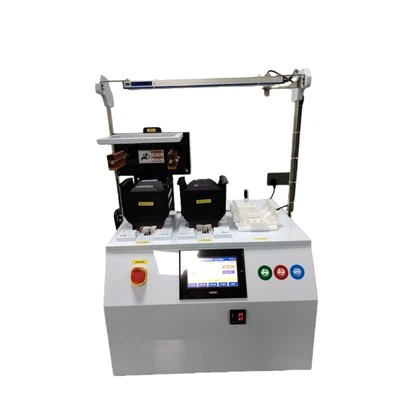
Hey there! As a supplier of Horizontal Wafer Dryers, I often get asked about what types of wafers are suitable for these nifty machines. So, I thought I'd sit down and write this blog to shed some light on the topic.
First off, let's quickly understand what a Horizontal Wafer Dryer is. It's a key piece of equipment in the semiconductor manufacturing process. Unlike the Vertical Wafer Dryer, which holds wafers vertically, a Horizontal Wafer Dryer lays them flat. This flat orientation has its own set of advantages when it comes to drying different types of wafers.


Silicon Wafers
Silicon wafers are by far the most common type of wafers used in the semiconductor industry. They're the building blocks for making all sorts of electronic devices, from your smartphones to your laptops. And guess what? They're a great fit for Horizontal Wafer Dryers.
Silicon wafers are usually pretty smooth and have a uniform surface. This makes it easier for the dryer to remove any moisture or contaminants. The horizontal position allows for an even distribution of the drying force across the entire surface of the wafer. When the dryer spins, the centrifugal force pushes the water off the wafer in a consistent manner, leaving behind a clean and dry surface.
Another reason silicon wafers work well is their size. Most Horizontal Wafer Dryers are designed to handle standard silicon wafer sizes, like 4 - inch, 6 - inch, 8 - inch, and even 12 - inch wafers. The dryer's chuck can securely hold these wafers in place during the drying process, ensuring that they don't move around and get damaged.
Gallium Arsenide (GaAs) Wafers
Gallium Arsenide wafers are another important type in the semiconductor world. They're used in high - speed electronic devices and optoelectronic applications. GaAs wafers have some unique properties that make them suitable for Horizontal Wafer Dryers.
These wafers are more brittle compared to silicon wafers. The horizontal orientation in the dryer helps to minimize the stress on the wafer during the drying process. Since the wafer is lying flat, there's less chance of it cracking or breaking under the centrifugal force.
GaAs wafers also have a higher surface energy, which means they tend to attract more moisture and contaminants. The Horizontal Wafer Dryer can effectively remove these unwanted substances. The dryer can be adjusted to provide the right amount of spin speed and drying time to ensure that the GaAs wafer is thoroughly dried without causing any damage to its surface.
Silicon Carbide (SiC) Wafers
Silicon Carbide wafers are becoming increasingly popular in power electronics and high - temperature applications. They have excellent thermal and electrical properties. When it comes to drying, Horizontal Wafer Dryers are a good choice for SiC wafers.
SiC wafers are quite hard and have a rough surface compared to silicon wafers. The horizontal position in the dryer allows for better access to all parts of the wafer's surface. The drying mechanism can reach into the tiny crevices and remove any moisture that might be trapped.
The dryer can also be set to a higher spin speed if needed, as SiC wafers can withstand the extra force. This ensures a more efficient drying process, leaving the SiC wafer ready for the next stage of manufacturing.
Glass Wafers
Glass wafers are used in a variety of applications, such as micro - electro - mechanical systems (MEMS) and flat - panel displays. They have a smooth and flat surface, which is ideal for Horizontal Wafer Dryers.
The horizontal drying method helps to prevent any scratches or marks on the glass surface. Since the wafer is lying flat, there's no contact with any vertical edges that could potentially cause damage. The dryer can gently remove the moisture from the glass wafer without altering its optical properties.
Considerations for Different Wafer Thicknesses
Not only the material but also the thickness of the wafer matters when it comes to using a Horizontal Wafer Dryer. Thicker wafers, say over 500 microns, can generally handle higher spin speeds in the dryer. They're more rigid and less likely to deform under the centrifugal force.
On the other hand, thinner wafers, like those under 200 microns, need to be dried more carefully. The dryer's settings may need to be adjusted to a lower spin speed to avoid any warping or cracking. Some Horizontal Wafer Dryers come with adjustable chucks and spin speed controls, which allow for precise drying of wafers with different thicknesses.
Contamination and Cleaning
Before putting any wafer into the Horizontal Wafer Dryer, it's crucial to make sure it's clean. Contaminants like particles, chemicals, or organic matter can affect the drying process and the quality of the final product.
Most Horizontal Wafer Dryers are used in conjunction with a pre - cleaning process. This could involve a wet cleaning step, where the wafer is soaked in a cleaning solution to remove any contaminants. After the cleaning, the wafer is then transferred to the dryer.
The dryer itself also plays a role in preventing re - contamination. It's designed with a sealed chamber to keep out any external particles. The air inside the chamber is filtered to ensure that only clean air comes into contact with the wafer during the drying process.
Conclusion
In conclusion, a wide range of wafers, including silicon, GaAs, SiC, and glass wafers, are suitable for Horizontal Wafer Dryers. Each type of wafer has its own unique properties, but the horizontal drying method offers many benefits, such as even drying, reduced stress on the wafer, and effective removal of moisture and contaminants.
If you're in the semiconductor manufacturing business and are looking for a reliable Horizontal Wafer Dryer, we've got you covered. Our dryers are designed to handle different types of wafers with precision and efficiency. Whether you're dealing with small - scale research projects or large - scale production, we can provide the right solution for you.
Don't hesitate to reach out to us if you have any questions or want to discuss your specific requirements. We're always happy to help you find the best dryer for your needs.
References
- Smith, J. (2018). Semiconductor Wafer Manufacturing Handbook. New York: Wiley.
- Jones, A. (2020). Advanced Drying Technologies in Semiconductor Industry. London: Elsevier.