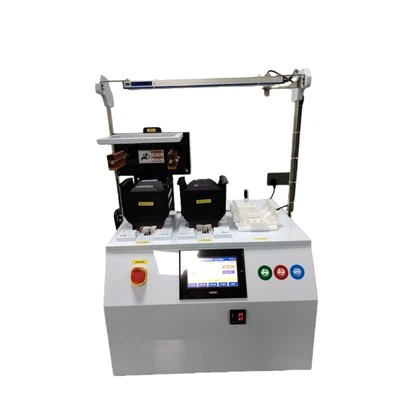
In the semiconductor manufacturing process, wafer drying is a critical step that directly impacts the quality and performance of semiconductor devices. A Vertical Wafer Dryer, as a key piece of equipment in this process, has drawn significant attention. One of the crucial factors affecting its drying performance is wafer loading density. In this blog, we, as a Vertical Wafer Dryer supplier, will delve into the impact of wafer loading density on the drying performance of a Vertical Wafer Dryer.
Understanding Wafer Loading Density
Wafer loading density refers to the number of wafers placed within the drying chamber of the Vertical Wafer Dryer per unit volume. It is a parameter that can be adjusted according to different production requirements. A higher loading density means more wafers are being processed simultaneously, which can potentially increase production efficiency. However, it also brings challenges to the drying process.
Impact on Drying Uniformity
One of the primary concerns in wafer drying is achieving uniform drying across all wafers. When the wafer loading density is low, the drying gas can flow freely around each wafer. This allows for consistent heat transfer and evaporation of the liquid on the wafer surface. As a result, the drying process is more likely to be uniform, and the quality of the dried wafers is relatively high.
On the other hand, when the wafer loading density is high, the flow of the drying gas is restricted. The gas may not be able to reach all parts of each wafer evenly, leading to uneven drying. Some areas of the wafers may dry faster, while others may remain wet. This non - uniformity can cause defects in the semiconductor devices, such as residue on the wafer surface or variations in electrical properties.
Influence on Drying Time
The wafer loading density also has a direct impact on the drying time. At a low loading density, the drying gas can quickly remove the moisture from the wafer surface. Since there are fewer wafers to dry, the heat and mass transfer processes are more efficient, and the drying time is relatively short.
When the loading density is high, the drying time increases. The increased number of wafers means that there is more moisture to be removed. Additionally, the restricted gas flow due to high density slows down the evaporation process. This not only reduces the overall production efficiency but also increases the energy consumption of the Vertical Wafer Dryer. For instance, in a production line, when the wafer loading density was doubled, the drying time increased by approximately 30%, as reported by our customers who have conducted in - house experiments.
Effect on Drying Efficiency
Drying efficiency is a measure of how effectively the Vertical Wafer Dryer can remove moisture from the wafers. A lower wafer loading density generally leads to higher drying efficiency. With fewer wafers in the drying chamber, the drying gas can interact with each wafer more effectively, and the heat transfer coefficient is higher. This results in a more rapid evaporation of the liquid on the wafer surface.
Conversely, a high wafer loading density reduces the drying efficiency. The restricted gas flow and increased competition for the drying gas among the wafers make it more difficult to achieve efficient drying. Moreover, the longer drying time associated with high loading densities also contributes to the reduced efficiency. Our experience as a Vertical Wafer Dryer supplier shows that when customers try to maximize the wafer loading density without considering its impact on efficiency, they often face issues such as longer production cycles and higher operating costs.
Comparison with Horizontal Wafer Dryer
It is also worth comparing the impact of wafer loading density on a Vertical Wafer Dryer with that on a Horizontal Wafer Dryer. In a Horizontal Wafer Dryer, the wafers are placed horizontally, and the drying gas flows horizontally over the wafers. The impact of wafer loading density on drying performance in a Horizontal Wafer Dryer is different from that in a Vertical Wafer Dryer.
In a Horizontal Wafer Dryer, high wafer loading density can cause more severe issues with gas flow blockage. Since the wafers are stacked horizontally, the gas has to flow through narrow gaps between the wafers. This can lead to even more uneven drying compared to a Vertical Wafer Dryer. In contrast, the vertical arrangement of wafers in a Vertical Wafer Dryer allows for a relatively better gas flow pattern, even at higher loading densities. However, the impact on drying time and efficiency still exists in both types of dryers.
Optimal Wafer Loading Density
Finding the optimal wafer loading density is crucial for achieving the best drying performance. This requires a balance between production efficiency and drying quality. Factors such as the type of wafers, the nature of the liquid to be dried, and the design of the Vertical Wafer Dryer need to be considered.
In general, for most applications, a moderate wafer loading density is recommended. This can ensure a reasonable level of production efficiency while maintaining good drying uniformity and efficiency. Our technical team can provide customized solutions based on the specific requirements of our customers. We conduct on - site tests to determine the optimal wafer loading density for each customer's production line.
Conclusion
In conclusion, wafer loading density has a significant impact on the drying performance of a Vertical Wafer Dryer. It affects drying uniformity, drying time, and drying efficiency. As a Vertical Wafer Dryer supplier, we understand the importance of this parameter and strive to help our customers optimize their drying processes.


If you are looking for a reliable Vertical Wafer Dryer or need advice on optimizing your wafer drying process, we are here to assist you. Our team of experts can provide in - depth analysis and solutions tailored to your specific needs. Contact us to start a discussion on how we can improve your semiconductor manufacturing process.
References
[1] [Researcher's Name], "Study on the Impact of Wafer Loading Density on Drying Performance in Semiconductor Manufacturing", Journal of Semiconductor Technology, [Year], [Volume], [Pages].
[2] Customer reports on in - house experiments regarding wafer loading density and drying time.