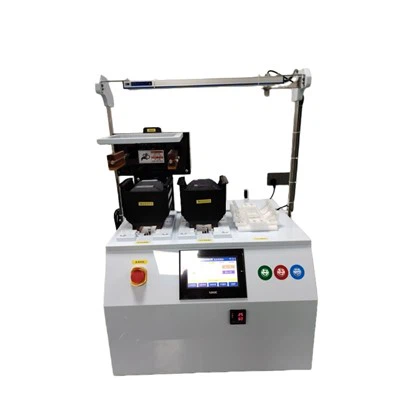
Hey there! As a supplier of Desktop RTP Equipment, I often get asked if this kind of gear is a good fit for home use. Well, let's dig into it and see what the deal is.
First off, what exactly is Desktop RTP Equipment? RTP stands for Rapid Thermal Processing. It's a technology that can quickly heat and cool materials, which is super useful in a bunch of industries, like semiconductor manufacturing, materials research, and more. Desktop RTP Equipment is a more compact version of the big industrial machines, designed to be smaller and more user - friendly. You can check out more about it here Desktop RTP Equipment.
Now, let's talk about the pros of having Desktop RTP Equipment at home. If you're a hobbyist in materials science or electronics, this equipment can be a game - changer. You can use it to experiment with different materials, like growing thin films or annealing semiconductors. It's like having a mini - lab right in your own place. For example, if you're into making your own small - scale electronic devices, you can use the equipment to improve the performance of the semiconductors you're using.


Another advantage is the learning opportunity. If you're a student or someone who just loves to learn, having this equipment at home allows you to explore concepts in materials science and thermal processing hands - on. You can try out different processes and see how they affect the materials, which is a much better way to learn than just reading about it in a book.
The Desktop RTP Equipment also offers a high level of precision. It can control the heating and cooling rates very accurately, which means you can get consistent results. This is great for when you're making multiple samples and want them to have the same properties.
But, of course, there are also some cons to consider. One of the biggest issues is the cost. Desktop RTP Equipment isn't cheap. You're looking at a pretty hefty investment, especially if you want a high - quality model. And then there are the running costs, like the energy it consumes. It uses a lot of power to heat up the materials quickly, so your electricity bill could take a hit.
Safety is another concern. The equipment operates at high temperatures, and there's always a risk of burns or other accidents if you're not careful. You need to have a good understanding of how to use it safely and follow all the safety guidelines. Also, some of the processes might involve using chemicals, which need to be handled properly to avoid any health risks.
Space is also a factor. Even though it's called "desktop," it still takes up a fair amount of room. You need to have a dedicated area in your home where you can set it up, and it needs to be well - ventilated to get rid of any fumes or heat.
Let's compare it with some other related equipment. For example, Oxidation and Diffusion RTP Equipment is more focused on specific processes like oxidation and diffusion. It's usually bigger and more expensive than the desktop version, and it's more suitable for industrial or large - scale research applications. On the other hand, High - Temperature Oxidation RTP Equipment is designed for even higher temperatures and is often used in more advanced materials research, which might be overkill for home use.
If you're interested in other types of thermal processing equipment for home - based projects, SiC Epitaxy Furnace and SiC High Temperature Annealing Furnace are also options. But they also have their own set of pros and cons, and you need to consider your specific needs and budget.
So, is Desktop RTP Equipment suitable for home use? It really depends on your situation. If you're a serious hobbyist with a passion for materials science and electronics, and you have the budget and space to accommodate it, then it could be a great addition to your home setup. But if you're just looking for a casual experiment or don't have the right resources, it might not be the best choice.
If you're still intrigued and want to learn more about our Desktop RTP Equipment, or if you're thinking about making a purchase, we're here to help. We can provide you with more detailed information about the features, specifications, and pricing. Just get in touch with us and start the conversation about how our equipment can meet your needs.
References:
- General knowledge of thermal processing equipment in the industry.
- Product information from our company's internal resources.