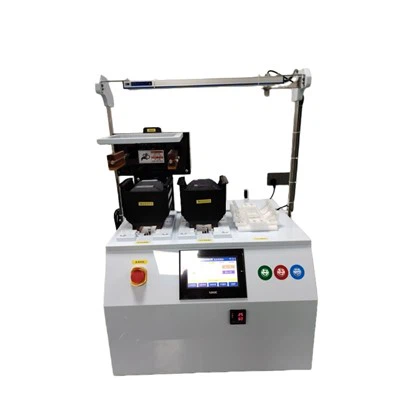
Alright folks, today I'm going to chat about oxidation safety measures in a wet oxidation furnace. As a supplier of Wet Oxidation Furnaces, I've seen firsthand the importance of getting these safety measures right. It's not just about keeping the equipment running smoothly; it's about protecting your team and your investment.
Understanding Wet Oxidation Furnaces
First things first, let's quickly go over what a wet oxidation furnace does. These furnaces are used in various industries, like semiconductor manufacturing, to grow oxide layers on materials. The "wet" part means there's water vapor involved in the oxidation process, which can influence the quality and properties of the oxide layer.
The basic idea is to heat up the material in an environment with oxygen and water vapor. This causes a chemical reaction that forms the desired oxide layer. But this process isn't without its risks, especially when it comes to oxidation safety.
Oxidation Safety Risks
One of the major risks in a wet oxidation furnace is over - oxidation. If the process goes on for too long or at the wrong temperature, the oxide layer can grow too thick, which can mess up the performance of the end product. For example, in semiconductor chips, an overly thick oxide layer can lead to electrical problems.
Another risk is the potential for explosion. Oxygen is a highly reactive gas, and when combined with a fuel source (which can sometimes be present in the form of organic residues in the furnace), it can create an explosive mixture. Water vapor can also add to the complexity, as changes in pressure and temperature can cause steam explosions.
There are also health risks for the operators. Inhaling the fumes and particles generated during the oxidation process can be harmful. Some of these fumes may contain toxic chemicals or metals that can cause respiratory problems, skin irritation, or even long - term health issues.
Safety Measures
Temperature and Time Control
The key to preventing over - oxidation is precise temperature and time control. Our wet oxidation furnaces come equipped with advanced temperature sensors and controllers. These sensors constantly monitor the temperature inside the furnace and adjust the heating elements accordingly. This ensures that the oxidation process happens at the exact temperature and for the right amount of time.
For example, if you're working on a specific semiconductor project that requires an oxide layer of a certain thickness, our furnace can be programmed to reach the optimal temperature and maintain it for the required duration. This not only improves the quality of the end product but also minimizes the risk of over - oxidation.
Gas Management
Proper gas management is crucial for preventing explosions. Our furnaces have a sophisticated gas supply system. We use high - quality valves and regulators to control the flow of oxygen and other gases. Before starting the oxidation process, the furnace is purged with an inert gas, like nitrogen. This removes any potentially explosive mixtures from the furnace chamber.
We also have gas sensors installed in the furnace. These sensors can detect the presence of any flammable or toxic gases. If the gas levels go above a certain threshold, the furnace automatically shuts down, and an alarm is triggered. This gives the operators time to take appropriate action and prevent any accidents.
Ventilation
Ventilation is another important safety measure. Good ventilation helps to remove the fumes and particles generated during the oxidation process. Our wet oxidation furnaces are designed with a powerful ventilation system. It sucks out the hot air, fumes, and particles from the furnace chamber and filters them before releasing them into the environment.
The ventilation system also helps to maintain a stable temperature and pressure inside the furnace. By constantly exchanging the air in the chamber, it prevents the build - up of heat and pressure, which could otherwise lead to steam explosions or other safety issues.


Operator Training
No matter how advanced the equipment is, proper operator training is essential. We provide comprehensive training for all our customers. Our training programs cover everything from basic furnace operation to advanced safety procedures.
During the training, the operators learn how to start and stop the furnace safely, how to monitor the various parameters, and how to respond to different emergency situations. We also teach them about the potential hazards associated with the wet oxidation process and how to protect themselves.
Related Products
If you're in the market for other thermal processing equipment, we've got you covered. We offer a range of high - quality products, including:
- SiC High Temperature Annealing Furnace: Ideal for annealing silicon carbide materials at high temperatures.
- SiC Epitaxy Furnace: Designed to grow high - quality silicon carbide epitaxial layers.
- Desktop RTP Equipment: A compact and efficient rapid thermal processing solution for smaller - scale projects.
- High - Temperature Oxidation RTP Equipment: Suitable for high - temperature oxidation processes in a rapid thermal environment.
- Vertical Oxidation And Annealing Furnace: Offers a vertical design for efficient oxidation and annealing operations.
Contact Us for Purchase
If you're interested in our wet oxidation furnaces or any of our other products, we'd love to talk to you. Whether you have questions about the safety features, want a product demonstration, or are ready to place an order, don't hesitate to reach out. We're here to help you find the best thermal processing solution for your needs.
References
- Semiconductor Manufacturing Handbook
- Safety Standards in Thermal Processing Equipment