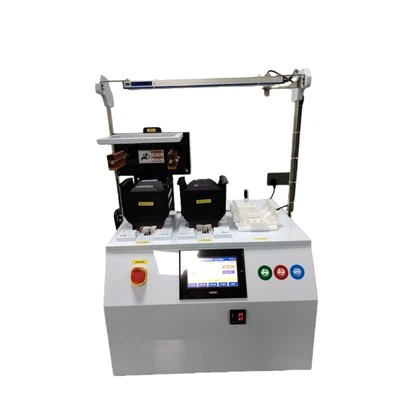
Hey there! As a supplier of lithography machines in the optoelectronics industry, I often get asked about the requirements for these high - tech devices. So, let's dive right into it.
First off, precision is the name of the game. In the optoelectronics industry, components are getting smaller and smaller, and the level of detail required is mind - blowing. Lithography machines need to be able to create patterns with extremely high precision. We're talking about nanometer - scale accuracy. For example, when manufacturing micro - LEDs, the lithography process has to precisely define the size and position of each individual LED. A tiny error in the pattern can lead to significant performance issues, like uneven lighting or reduced efficiency.
Resolution is closely related to precision. A high - resolution lithography machine can produce finer and more detailed patterns. In optoelectronics, where the performance of devices often depends on the exact shape and size of components, a machine with poor resolution just won't cut it. For instance, in the production of holographic optical elements, a high - resolution lithography method is essential to capture the complex interference patterns that create the holographic effect. Without a high - resolution machine, the resulting holograms may look blurry or fail to function as intended.
Another key requirement is throughput. In the optoelectronics industry, time is money. Manufacturers need to produce a large number of components in a short period. So, lithography machines have to be fast. They should be able to process multiple wafers or substrates in an efficient manner. This means quick alignment, exposure, and processing times. For example, in mass - producing optical sensors, a slow lithography machine will bottleneck the entire production line, leading to increased costs and longer lead times.
The flexibility of lithography machines is also crucial. Optoelectronics is a diverse field, and different products may require different lithography techniques. A good lithography machine should be able to adapt to various materials, sizes, and pattern requirements. Some applications may call for the use of UV light for exposure, while others might need electron beam lithography. The machine should be easily configurable to switch between different modes and processes. For example, in the production of flexible optoelectronic devices, the lithography machine needs to be able to work with flexible substrates without causing damage.
Now, let's talk about reliability. Downtime is a nightmare in any manufacturing process, and the optoelectronics industry is no exception. Lithography machines have to be built to last and operate reliably for long periods. They should have minimal maintenance requirements and be able to withstand the rigors of continuous use. A reliable machine reduces the risk of production interruptions and ensures consistent quality. For instance, in a large - scale optoelectronic manufacturing plant, if the lithography machine breaks down frequently, it can lead to huge losses in production and revenue.
Cost - effectiveness is another important consideration. While high - end lithography machines can offer top - notch performance, they also come with a hefty price tag. Manufacturers need to balance the performance requirements with the cost of the machine. As a supplier, we strive to offer lithography machines that provide a good balance between quality and cost. This allows our customers to get the best value for their money and remain competitive in the market.
In addition to these general requirements, there are also some specific needs depending on the type of optoelectronic product. For example, in the production of semiconductor lasers, the lithography machine has to be able to create very precise waveguide structures. These waveguides are responsible for guiding the light within the laser, and any deviation from the design can affect the laser's output power and beam quality.
For the production of organic light - emitting diodes (OLEDs), the lithography process needs to be gentle on the organic materials. These materials are often sensitive to heat, light, and chemicals, so the lithography machine has to use appropriate techniques to avoid damaging them. This might involve using low - energy exposure methods or special coatings to protect the organic layers.
When it comes to the latest trends in the optoelectronics industry, there's a growing demand for Maskless Lithography Machine. These machines offer greater flexibility and can significantly reduce the cost of prototyping. Instead of using traditional photomasks, maskless lithography machines use direct writing techniques, which allow for quick changes to the pattern design. This is especially useful for research and development purposes or for producing small - batch, customized optoelectronic products.
Another important aspect is the Coating and Developing System. A good coating system ensures a uniform layer of photoresist on the substrate, which is essential for accurate pattern transfer. The developing system then needs to be able to precisely remove the exposed or unexposed parts of the photoresist, depending on the type of resist used. Together, these systems play a critical role in the overall lithography process and can greatly impact the quality of the final optoelectronic products.
As a lithography machine supplier, we understand these requirements inside out. We're constantly working on improving our machines to meet the ever - evolving needs of the optoelectronics industry. Our R&D team is always exploring new technologies and materials to enhance the precision, resolution, throughput, and flexibility of our products.


If you're in the optoelectronics business and are looking for a reliable lithography machine supplier, we'd love to have a chat with you. We can offer you in - depth consultations to understand your specific requirements and recommend the best solutions for your production needs. Whether you're a startup looking to develop a new optoelectronic product or an established manufacturer aiming to upgrade your production line, we've got the expertise and the products to support you. So, don't hesitate to reach out and start a conversation about how we can work together to take your optoelectronic production to the next level.
References
- Smith, J. (2022). Advances in Optoelectronic Lithography. Journal of Optoelectronic Manufacturing.
- Johnson, A. (2023). Precision Requirements in Optoelectronic Component Production. Optoelectronics Today.
- Brown, C. (2021). Cost - effective Lithography Solutions for the Optoelectronics Industry. Manufacturing Insights.