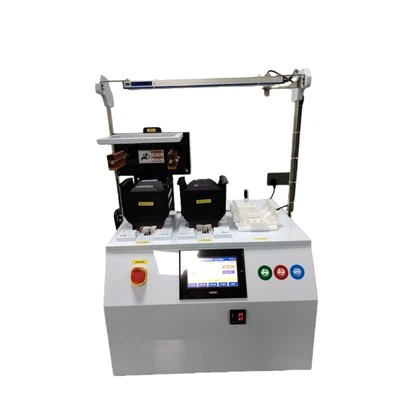
Hey there! As a supplier of Ion Beam Etching Equipment, I often get asked about the maximum substrate size that our gear can handle. It's a crucial question, especially for those in the semiconductor, microfabrication, and materials research fields. So, let's dive right in and explore this topic.
Understanding Ion Beam Etching
First off, let's quickly go over what ion beam etching is. Ion beam etching is a process used to remove material from a substrate by bombarding it with high-energy ions. This technique offers high precision and control, making it ideal for creating micro and nanostructures. Our Ion Beam Etching Equipment is designed to provide reliable and efficient etching for a wide range of applications.

Factors Affecting Substrate Size
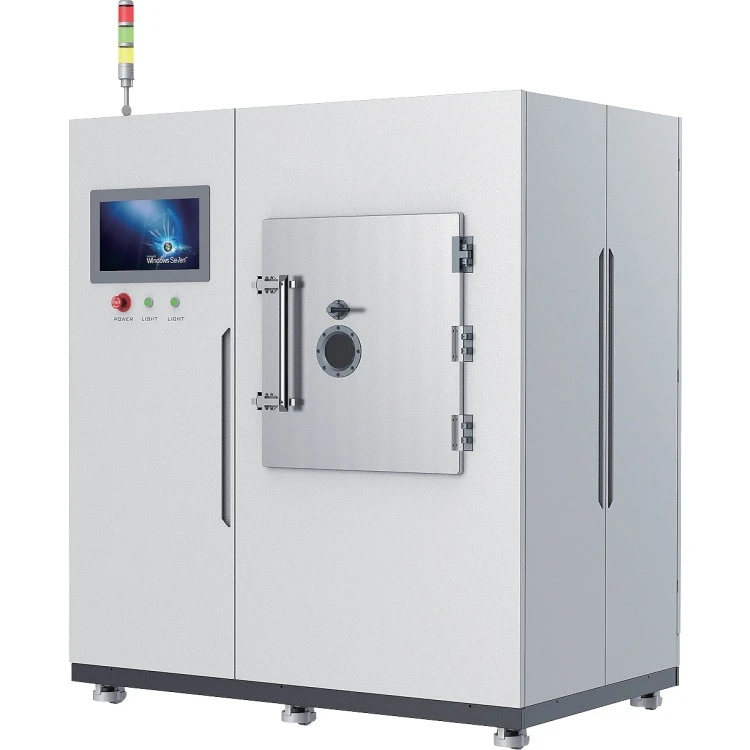
The maximum substrate size that our ion beam etching equipment can handle depends on several factors. One of the main factors is the size of the ion source and the beam path. The ion source needs to be able to generate a uniform ion beam over the entire substrate surface. If the substrate is too large, it may be difficult to achieve a consistent etching rate across the entire surface.
Another factor is the chamber size. The chamber needs to be large enough to accommodate the substrate and allow for proper gas flow and vacuum conditions. If the chamber is too small, it may limit the size of the substrate that can be processed.
The design of the stage that holds the substrate also plays a role. The stage needs to be able to support the weight of the substrate and provide precise positioning. If the stage is not designed to handle large substrates, it may cause issues with alignment and etching uniformity.
Our Equipment's Capabilities
Our ion beam etching equipment is available in different models, each with its own maximum substrate size capabilities. For our standard models, we can handle substrates up to 6 inches in diameter. These models are suitable for a wide range of applications, including semiconductor device fabrication, MEMS (Micro-Electro-Mechanical Systems) manufacturing, and thin film deposition.
However, we also offer custom solutions for customers who need to process larger substrates. Our engineering team can work with you to design a system that meets your specific requirements. We have experience in building systems that can handle substrates up to 12 inches in diameter or even larger in some cases.
Advantages of Larger Substrate Processing
Processing larger substrates can offer several advantages. For one, it can increase productivity. By processing larger substrates, you can etch more devices or structures in a single run, reducing the overall processing time. This can be especially beneficial for high-volume manufacturing.
Larger substrates also allow for more complex designs. You can fit more features and components on a larger substrate, enabling the creation of more advanced devices. This can be particularly useful in the development of next-generation technologies, such as 5G communication, artificial intelligence, and quantum computing.
Applications for Different Substrate Sizes
The choice of substrate size depends on the specific application. For research and development purposes, smaller substrates are often sufficient. They are easier to handle and can be used to test new processes and materials. Our Silicon Etching System is a great option for these types of applications, as it offers high precision and flexibility.
For large-scale manufacturing, larger substrates are typically preferred. They allow for higher throughput and can reduce the cost per unit. Our ICP Etcher is well-suited for high-volume production, as it can handle larger substrates and provide consistent etching results.
Considerations for Choosing the Right Substrate Size
When choosing the right substrate size for your application, there are a few things to consider. First, think about the size of the devices or structures you need to create. If you are working on small-scale components, a smaller substrate may be sufficient. However, if you are developing larger devices or need to fit multiple components on a single substrate, a larger substrate may be necessary.
You also need to consider the available space in your facility. Larger substrates require more space for processing and handling. Make sure you have enough room in your cleanroom or laboratory to accommodate the equipment and the substrates.
Finally, consider your budget. Larger substrates can be more expensive, both in terms of the substrate itself and the equipment needed to process them. Make sure you have the financial resources to invest in the appropriate equipment and substrates.
Conclusion
In conclusion, the maximum substrate size that our ion beam etching equipment can handle depends on several factors, including the size of the ion source, the chamber size, and the stage design. Our standard models can handle substrates up to 6 inches in diameter, but we also offer custom solutions for larger substrates. Processing larger substrates can offer several advantages, including increased productivity and the ability to create more complex designs. When choosing the right substrate size for your application, consider the size of the devices or structures you need to create, the available space in your facility, and your budget.
If you're interested in learning more about our ion beam etching equipment or have specific requirements for substrate size, don't hesitate to reach out. We'd be happy to discuss your needs and help you find the right solution for your application. Let's start a conversation and see how we can work together to achieve your goals.
References
- Smith, J. (2020). Ion Beam Etching: Principles and Applications. Springer.
- Jones, A. (2019). Microfabrication Techniques for Semiconductor Devices. Wiley.
- Brown, C. (2018). Advances in Nanofabrication Technologies. Elsevier.