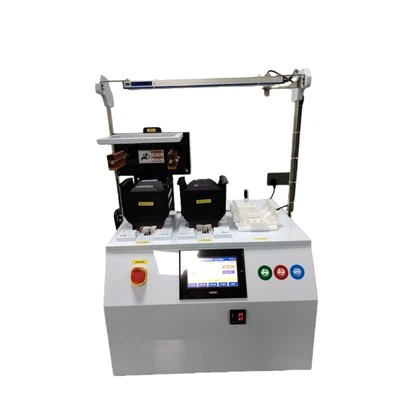
Training an operator for a lithography machine is a complex process that varies in duration depending on several factors. As a supplier of lithography machines, I've seen firsthand how different aspects can influence the training time.


First off, let's talk about the type of lithography machine. There are various kinds out there, like the Coating and Developing System, Nano 3D Lithography System, and Maskless Lithography Machine. Each of these machines has its own unique features and functions, which means the training required for each will be different.
For a basic coating and developing system, the training might take around 2 - 3 weeks. This system is relatively straightforward in terms of its operation. The operator needs to learn how to set up the coating process, control the developing parameters, and handle the chemicals safely.
Most of the training here focuses on practical hands - on experience. The trainee will spend a lot of time working with the machine under the supervision of an experienced operator. They'll learn about the different types of coatings, how to adjust the coating thickness, and how to troubleshoot common issues like uneven coating or developing problems.
On the other hand, a Nano 3D Lithography System is much more complex. This machine is used for creating extremely detailed 3D structures at the nanoscale. The training for this type of machine can take anywhere from 2 - 3 months. The operator has to understand advanced concepts in nanotechnology, such as the principles of 3D printing at the nanoscale, the properties of different materials used in the process, and how to operate the high - precision controls of the machine. There's also a significant amount of theoretical learning involved. Trainees need to study the physics and chemistry behind the 3D lithography process, as well as the software used to design and control the machine.
A Maskless Lithography Machine is another advanced piece of equipment. Training for this machine can take about 1 - 2 months. The main focus here is on learning how to use the maskless technology, which allows for more flexible and precise patterning. The operator has to be familiar with the software that generates the patterns, understand the optical and electrical components of the machine, and know how to maintain and calibrate it.
Another factor that affects the training time is the prior experience of the trainee. If the trainee has a background in engineering, physics, or a related field, they'll likely pick up the skills faster. For example, someone with a degree in electrical engineering might have an easier time understanding the electrical components of a lithography machine. On the contrary, if the trainee has no prior technical knowledge, they'll need more time to learn the basics.
The training method also plays a role. Some companies prefer a classroom - style training, where the trainees learn the theory first and then move on to practical sessions. Others use an on - the - job training approach, where the trainees start working with the machine right away and learn as they go. The on - the - job training can be more effective in some cases, as it allows the trainees to apply what they learn immediately.
However, it also requires a more experienced supervisor to guide the trainees.
The quality of the training materials and the support from the supplier are also crucial. At our company, we provide comprehensive training materials, including user manuals, video tutorials, and online resources. Our technical support team is always available to answer any questions the trainees might have. This kind of support can significantly reduce the training time and ensure that the operators are well - trained.
In addition to the technical training, there's also safety training. Lithography machines involve the use of chemicals, high - voltage electricity, and precision optics. Operators need to be trained on how to handle these safely to avoid accidents. Safety training usually takes about a week and is an essential part of the overall training process.
Once the training is completed, it's important to have a period of on - the - job evaluation. This allows the company to assess whether the operator has truly mastered the skills required to operate the machine. During this evaluation period, the operator will work under the supervision of an experienced colleague, and their performance will be monitored.
If you're in the market for a lithography machine and are concerned about the training process, don't worry. We're here to make the transition as smooth as possible. Our team of experts will work with you to develop a customized training plan based on your specific needs and the type of machine you purchase. Whether you're a small - scale research lab or a large - scale manufacturing facility, we have the resources and expertise to train your operators effectively.
If you're interested in learning more about our lithography machines or want to discuss the training process in detail, feel free to reach out to us. We're always happy to have a conversation and help you find the best solution for your business.
References:
- Industry reports on lithography machine training
- Internal training materials from our company