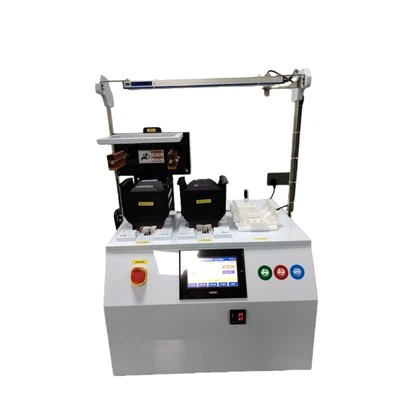
Hey there! As a supplier of 3D Optical Profilers, I often get asked about the upgrading costs of these nifty devices, both in terms of hardware and software. So, let's dive right in and break it down.
Hardware Upgrades
When it comes to hardware upgrades for a 3D Optical Profiler, there are several components that might need an update over time. One of the most common upgrades is the camera. A better camera can significantly improve the image quality and resolution of the profiler. High - resolution cameras can capture more detailed surface information, which is crucial for applications like semiconductor inspection or materials research.
The cost of a camera upgrade can vary widely depending on the specifications. A basic upgrade might cost a few thousand dollars, while a high - end, high - resolution camera could set you back tens of thousands. For example, if you're looking for a camera with a very high frame rate and ultra - high resolution for real - time 3D imaging, you're likely to pay a premium.
Another important hardware component is the light source. The quality of the light source affects the accuracy of the surface measurement. Upgrading to a more stable and powerful light source can improve the signal - to - noise ratio and the overall measurement precision. LED light sources are popular these days because they are energy - efficient and have a long lifespan. The cost of upgrading the light source can range from a couple of thousand dollars to around ten thousand, depending on the type and power of the light.
The stage of the 3D Optical Profiler is also a critical part. A more precise and stable stage can provide better positioning accuracy, which is essential for measuring small features. Upgrading the stage to one with higher resolution and better repeatability can cost anywhere from five thousand to twenty thousand dollars. This kind of upgrade is especially important for applications where high - precision measurements are required, such as in the semiconductor industry.
In addition to these major components, there are also other smaller hardware upgrades like lenses. Upgrading to a higher - quality lens can improve the image sharpness and reduce distortion. The cost of a lens upgrade can range from a few hundred to a few thousand dollars, depending on the type and magnification of the lens.
Software Upgrades
Software is just as important as hardware when it comes to a 3D Optical Profiler. The software is responsible for controlling the hardware, processing the data, and generating the 3D surface profiles.
One of the main reasons for software upgrades is to add new features. For example, new algorithms for surface roughness analysis or defect detection can be added through software updates. These new features can enhance the functionality of the profiler and make it more suitable for different applications.
The cost of software upgrades can vary depending on the complexity of the new features. A minor software update that just fixes bugs and improves stability might be free or cost a few hundred dollars. However, a major software upgrade that adds significant new features could cost several thousand dollars.
Another factor that affects the software upgrade cost is the licensing model. Some software is sold with a perpetual license, which means you pay a one - time fee for the software and can use it indefinitely. Other software uses a subscription - based model, where you pay a regular fee (usually annually) to use the software. Subscription - based models can be more cost - effective in the short term, but over time, the total cost might be higher compared to a perpetual license.
Overall Cost Considerations
When considering the upgrading cost of a 3D Optical Profiler, it's important to look at the overall picture. The cost of upgrades should be weighed against the benefits they bring. For example, if a hardware or software upgrade can improve the measurement accuracy and efficiency, it can lead to better quality control and potentially save money in the long run.
It's also important to consider the compatibility of the upgrades. Not all upgrades are compatible with every 3D Optical Profiler model. Before making an upgrade, it's crucial to check with the manufacturer or a technical expert to ensure that the upgrade will work properly with your existing system.
Real - World Applications and Upgrades
Let's take a look at some real - world applications and how upgrades can impact them. In the semiconductor industry, 3D Optical Profiler are widely used for wafer inspection. An upgrade to the hardware, such as a higher - resolution camera or a more precise stage, can improve the detection of small defects on the wafer surface. This can lead to better yield and lower production costs.
For materials research, a software upgrade that adds new analysis algorithms can help researchers gain more insights into the surface properties of materials. For example, new algorithms for measuring surface roughness or porosity can provide valuable information for developing new materials.
Another application is in the manufacturing of micro - electromechanical systems (MEMS). Automated Wafer Inspection Microscope are often used in this field. Upgrading the hardware and software of these microscopes can improve the accuracy of MEMS component inspection, ensuring the quality of the final products.
Advanced Technologies and Future Upgrades
As technology continues to evolve, there are always new possibilities for upgrading 3D Optical Profilers. For example, the integration of artificial intelligence (AI) and machine learning (ML) into the software can enhance the data analysis capabilities of the profiler. AI - based algorithms can automatically detect and classify defects, reducing the need for manual inspection.
Another emerging technology is the use of multi - wavelength light sources. These light sources can provide more information about the surface properties of materials, allowing for more accurate measurements. Upgrading to a multi - wavelength light source might be a future option for those who need more advanced measurement capabilities.


Conclusion
In conclusion, the upgrading cost of a 3D Optical Profiler in terms of hardware and software can vary widely depending on the specific components and features you want to upgrade. It's important to carefully consider the benefits of the upgrades and how they fit into your application.
If you're interested in upgrading your 3D Optical Profiler or learning more about our products, don't hesitate to reach out. We're here to help you make the best decision for your needs. Whether you're in the semiconductor industry, materials research, or any other field that requires high - precision surface measurement, we can provide you with the right solutions.
References
- Industry reports on 3D Optical Profiler technology and market trends.
- Technical documentation from 3D Optical Profiler manufacturers.