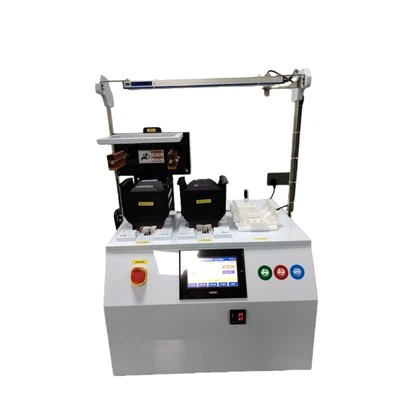
Spin rinse dryers are essential equipment in many industries, especially in semiconductor manufacturing, electronics, and precision parts production. One of the common concerns potential buyers have is whether spin rinse dryers make a lot of noise. As a spin rinse dryer supplier, I'd like to delve into this topic and provide a comprehensive analysis.
The Working Principle of Spin Rinse Dryers
Before discussing the noise issue, it's important to understand how spin rinse dryers work. These machines typically operate by placing the items to be dried in a chamber. The chamber then rotates at high speeds, using centrifugal force to remove water or other liquids from the surfaces of the items. In addition to the spinning action, some models also use a rinsing process to clean the items before drying.
The main components that contribute to the operation of a spin rinse dryer include the motor, the spinning chamber, and the control system. The motor is responsible for driving the rotation of the chamber, while the control system regulates the speed and duration of the spin cycle.
Factors Affecting Noise Levels
Several factors can influence the noise levels produced by spin rinse dryers.
1. Motor Type and Quality
The motor is one of the primary sources of noise in a spin rinse dryer. Different types of motors have different noise characteristics. For example, brushed DC motors tend to be noisier than brushless DC motors. Brushed motors have physical brushes that make contact with the commutator, which can create friction and generate noise. On the other hand, brushless motors use electronic commutation, resulting in smoother operation and less noise.
The quality of the motor also plays a crucial role. High - quality motors are often designed and manufactured with better precision, which reduces vibrations and noise. They are also more likely to have advanced noise - reduction features, such as sound - insulating materials or optimized motor design.


2. Spinning Speed
The speed at which the spin rinse dryer rotates has a direct impact on the noise level. Generally, the higher the spinning speed, the louder the noise. This is because at higher speeds, the air resistance and the mechanical stress on the components increase. When the chamber rotates rapidly, it creates a strong airflow, which can produce a whistling or humming sound. Additionally, the increased mechanical stress can cause vibrations in the machine, leading to more noise.
3. Machine Design and Construction
The overall design and construction of the spin rinse dryer can significantly affect its noise performance. A well - designed machine will have features that help to dampen vibrations and reduce noise. For example, the use of shock - absorbing materials in the base of the machine can prevent vibrations from being transmitted to the floor and other surrounding surfaces.
The enclosure of the spin rinse dryer also matters. A tightly sealed and well - insulated enclosure can contain the noise within the machine, preventing it from escaping into the environment. Some advanced models even have double - walled enclosures with sound - absorbing materials in between to further reduce noise.
4. Load Balance
An unbalanced load in the spin rinse dryer can cause excessive vibrations and noise. When the items inside the chamber are not evenly distributed, the machine will experience uneven forces during rotation. This can lead to wobbling and shaking, which in turn generates a lot of noise. It is important to ensure that the load is properly balanced before starting the spin cycle.
Noise Levels in Different Types of Spin Rinse Dryers
There are two main types of spin rinse dryers: horizontal wafer dryers and vertical wafer dryers.
Horizontal Wafer Dryer
A Horizontal Wafer Dryer has a horizontally oriented spinning chamber. These dryers are often used for drying flat and delicate items such as semiconductor wafers. In general, horizontal wafer dryers can be designed to operate relatively quietly. Their horizontal design allows for better load distribution, which can reduce vibrations and noise. Additionally, many modern horizontal wafer dryers are equipped with high - quality motors and advanced noise - reduction features.
Vertical Wafer Dryer
Vertical Wafer Dryers have a vertically oriented spinning chamber. They are suitable for drying items that are more vertically shaped or have a larger height. The vertical design may pose some challenges in terms of load balance, which can potentially lead to more noise if not properly managed. However, with proper engineering and design, vertical wafer dryers can also achieve acceptable noise levels.
Measuring and Comparing Noise Levels
The noise level of a spin rinse dryer is typically measured in decibels (dB). A normal conversation is usually around 60 dB, while a noisy factory environment can reach 85 dB or more. Most modern spin rinse dryers are designed to operate at noise levels between 60 - 75 dB, which is similar to the noise level of a household dishwasher.
When comparing different spin rinse dryers, it is important to look at the manufacturer's specifications for noise levels. Some manufacturers may provide detailed information about the noise level under different operating conditions, such as at different spinning speeds.
Noise Reduction Strategies
As a spin rinse dryer supplier, we are committed to providing products with low noise levels. Here are some of the strategies we use to reduce noise:
1. Motor Selection
We carefully select high - quality brushless DC motors for our spin rinse dryers. These motors offer smooth operation and low noise levels. We also work with motor manufacturers to optimize the motor design for our specific applications, ensuring that the motor operates as quietly as possible.
2. Vibration Dampening
We incorporate vibration - dampening materials in the construction of our spin rinse dryers. Rubber mounts and shock - absorbing pads are used to isolate the machine from the floor and reduce the transmission of vibrations. This helps to minimize the noise caused by vibrations.
3. Enclosure Design
Our spin rinse dryers are designed with well - insulated enclosures. The enclosures are made of materials that can absorb and block sound, preventing it from escaping into the environment. We also pay attention to the sealing of the enclosure to ensure that there are no gaps where noise can leak out.
4. Load Balancing Assistance
We provide clear instructions to our customers on how to properly balance the load in the spin rinse dryer. Some of our models even have built - in sensors that can detect an unbalanced load and adjust the operation accordingly to reduce vibrations and noise.
Conclusion
In conclusion, spin rinse dryers do not necessarily make a lot of noise. While there are factors that can contribute to noise, such as motor type, spinning speed, machine design, and load balance, modern spin rinse dryers can be designed and manufactured to operate at relatively low noise levels.
As a spin rinse dryer supplier, we understand the importance of providing quiet - operating equipment. Our products, including both Horizontal Wafer Dryers and Vertical Wafer Dryers, are engineered with advanced noise - reduction technologies to meet the needs of our customers.
If you are in the market for a spin rinse dryer and are concerned about noise levels, we encourage you to contact us for more information. Our team of experts can provide you with detailed specifications and help you choose the right model for your specific requirements. We look forward to discussing your procurement needs and working with you to find the best spin rinse dryer solution.
References
- "Handbook of Semiconductor Manufacturing Technology" by Yung - Ching Chang
- "Principles of Machine Design" by Robert L. Norton