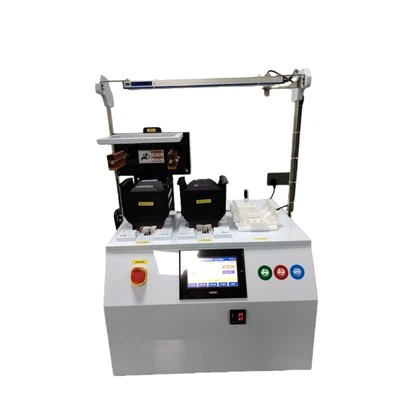
In the field of thermal processing, wet oxidation furnaces play a crucial role in a variety of industrial applications. As a supplier of Wet Oxidation Furnace, I often encounter inquiries about the oxidation products generated within these furnaces. Understanding these oxidation products is essential for optimizing the performance of wet oxidation furnaces and ensuring the quality of the final products. In this blog post, I will delve into the topic of oxidation products in a wet oxidation furnace, exploring the factors that influence their formation and the implications for various industries.
The Basics of Wet Oxidation
Wet oxidation is a chemical process that involves the reaction of a substance with oxygen in the presence of water at elevated temperatures and pressures. In a wet oxidation furnace, this process is typically carried out in a sealed chamber where the reactants are heated to a specific temperature and maintained under a controlled pressure. The water in the system serves as a medium for the reaction, facilitating the transfer of oxygen to the target substance and enhancing the oxidation process.
The main advantage of wet oxidation is its ability to break down complex organic compounds into simpler, more manageable substances. This makes it an effective method for treating industrial wastewater, sludge, and other organic waste materials. By oxidizing the organic matter, wet oxidation can reduce the chemical oxygen demand (COD) and biological oxygen demand (BOD) of the waste, making it more suitable for further treatment or disposal.
Oxidation Products in a Wet Oxidation Furnace
The oxidation products formed in a wet oxidation furnace depend on several factors, including the nature of the reactants, the temperature and pressure conditions, and the presence of catalysts. In general, the oxidation of organic compounds in a wet oxidation furnace can result in the formation of a variety of products, including carbon dioxide, water, and various intermediate compounds.
Carbon Dioxide and Water
The complete oxidation of organic compounds in a wet oxidation furnace typically results in the formation of carbon dioxide and water. This is the ideal outcome of the oxidation process, as it represents the complete breakdown of the organic matter into its simplest components. The reaction can be represented by the following general equation:
[ C_xH_yO_z + (x + \frac{y}{4}-\frac{z}{2})O_2 \rightarrow xCO_2+\frac{y}{2}H_2O ]
where ( C_xH_yO_z ) represents the organic compound.
The formation of carbon dioxide and water is highly desirable in many applications, as it reduces the environmental impact of the waste and provides a clean and efficient way to dispose of organic matter. In addition, the heat generated during the oxidation process can be recovered and used for other purposes, such as heating or power generation.
Intermediate Compounds
In some cases, the oxidation of organic compounds in a wet oxidation furnace may not proceed to completion, resulting in the formation of intermediate compounds. These intermediate compounds can include carboxylic acids, aldehydes, ketones, and other organic substances. The formation of intermediate compounds is often influenced by the reaction conditions, such as the temperature, pressure, and residence time.
For example, at lower temperatures and pressures, the oxidation of organic compounds may be incomplete, leading to the formation of carboxylic acids. These carboxylic acids can be further oxidized to carbon dioxide and water at higher temperatures and pressures. However, if the reaction conditions are not carefully controlled, the carboxylic acids may accumulate in the system, leading to a decrease in the efficiency of the oxidation process.
In addition to carboxylic acids, other intermediate compounds such as aldehydes and ketones can also be formed during the wet oxidation process. These compounds are often more reactive than the original organic compounds and can participate in further reactions, leading to the formation of more complex products.
Inorganic Products
In addition to organic oxidation products, wet oxidation furnaces can also generate inorganic products, depending on the composition of the reactants. For example, if the waste material contains metals or other inorganic substances, these substances may be oxidized during the wet oxidation process, resulting in the formation of metal oxides or other inorganic compounds.
The formation of inorganic products can have important implications for the performance of the wet oxidation furnace and the quality of the final products. For example, metal oxides can accumulate on the surfaces of the furnace components, leading to fouling and corrosion. In addition, the presence of inorganic products in the treated waste can affect its suitability for further treatment or disposal.
Factors Influencing the Formation of Oxidation Products
The formation of oxidation products in a wet oxidation furnace is influenced by several factors, including the nature of the reactants, the temperature and pressure conditions, the presence of catalysts, and the residence time.
Nature of the Reactants
The nature of the reactants is one of the most important factors influencing the formation of oxidation products in a wet oxidation furnace. Different organic compounds have different chemical structures and reactivities, which can affect the rate and extent of the oxidation reaction. For example, compounds with high carbon and hydrogen content are generally more difficult to oxidize than compounds with high oxygen content.
In addition, the presence of functional groups in the organic compounds can also affect the oxidation process. For example, compounds with double bonds or aromatic rings are often more reactive than compounds with single bonds. The presence of heteroatoms such as nitrogen, sulfur, and phosphorus can also affect the oxidation process, as these atoms can participate in the reaction and form different oxidation products.
Temperature and Pressure
The temperature and pressure conditions in a wet oxidation furnace have a significant impact on the formation of oxidation products. Generally, higher temperatures and pressures favor the complete oxidation of organic compounds to carbon dioxide and water. This is because higher temperatures increase the reaction rate and provide more energy for the oxidation process, while higher pressures increase the solubility of oxygen in the water and enhance the mass transfer of oxygen to the reactants.
However, increasing the temperature and pressure also has some drawbacks. For example, higher temperatures can lead to the formation of more intermediate compounds and the degradation of the furnace components. In addition, higher pressures require more expensive equipment and can increase the operating costs of the wet oxidation furnace. Therefore, it is important to optimize the temperature and pressure conditions to achieve the desired oxidation products while minimizing the negative effects.


Presence of Catalysts
The presence of catalysts can significantly enhance the oxidation process in a wet oxidation furnace. Catalysts are substances that increase the rate of a chemical reaction without being consumed in the process. In wet oxidation, catalysts can help to lower the activation energy of the oxidation reaction, making it easier for the organic compounds to react with oxygen.
Common catalysts used in wet oxidation furnaces include transition metal oxides, such as titanium dioxide, manganese dioxide, and iron oxide. These catalysts can be supported on a variety of materials, such as alumina, silica, or activated carbon, to increase their surface area and improve their catalytic activity.
The use of catalysts can have several benefits in wet oxidation. Firstly, it can increase the reaction rate, allowing for a shorter residence time and higher throughput. Secondly, it can improve the selectivity of the oxidation reaction, leading to the formation of more desirable oxidation products. Finally, it can reduce the temperature and pressure requirements of the wet oxidation process, resulting in lower operating costs.
Residence Time
The residence time, which is the time that the reactants spend in the wet oxidation furnace, also affects the formation of oxidation products. Generally, a longer residence time allows for more complete oxidation of the organic compounds and the formation of fewer intermediate compounds. However, a longer residence time also means a lower throughput and higher operating costs.
Therefore, it is important to optimize the residence time to achieve the desired oxidation products while maintaining a reasonable throughput. This can be achieved by adjusting the flow rate of the reactants and the volume of the wet oxidation furnace.
Implications for Different Industries
The oxidation products formed in a wet oxidation furnace have important implications for various industries, including wastewater treatment, chemical manufacturing, and energy production.
Wastewater Treatment
In the wastewater treatment industry, wet oxidation is widely used to treat industrial wastewater and sludge. The oxidation products, such as carbon dioxide and water, are environmentally friendly and can be easily discharged into the environment. In addition, the reduction of COD and BOD in the wastewater makes it more suitable for further treatment or reuse.
However, the presence of intermediate compounds and inorganic products in the treated wastewater can pose challenges for the subsequent treatment processes. For example, the carboxylic acids formed during the wet oxidation process can lower the pH of the wastewater and require additional neutralization steps. The presence of metal oxides can also cause fouling and corrosion in the treatment equipment.
Chemical Manufacturing
In the chemical manufacturing industry, wet oxidation can be used to produce various chemicals, such as carboxylic acids, aldehydes, and ketones. These chemicals are important intermediates in the production of pharmaceuticals, plastics, and other high-value products.
By controlling the reaction conditions and the choice of catalysts, the wet oxidation process can be optimized to produce the desired chemicals with high selectivity and yield. However, the formation of by-products and intermediate compounds can also pose challenges for the purification and separation of the target chemicals.
Energy Production
In the energy production industry, wet oxidation can be used to convert organic waste materials into energy. The heat generated during the oxidation process can be recovered and used for heating or power generation. In addition, the carbon dioxide produced during the oxidation process can be captured and used for other purposes, such as enhanced oil recovery or carbon sequestration.
However, the efficiency of the energy conversion process depends on the quality of the oxidation products and the ability to recover the heat generated during the oxidation process. Therefore, it is important to optimize the wet oxidation process to maximize the energy output and minimize the environmental impact.
Conclusion
In conclusion, the oxidation products formed in a wet oxidation furnace depend on several factors, including the nature of the reactants, the temperature and pressure conditions, the presence of catalysts, and the residence time. Understanding these factors is essential for optimizing the performance of wet oxidation furnaces and ensuring the quality of the final products.
As a supplier of Wet Oxidation Furnace, we are committed to providing our customers with high-quality equipment and technical support to help them achieve their oxidation goals. Our wet oxidation furnaces are designed to operate at a wide range of temperatures and pressures, and can be customized to meet the specific needs of different industries.
In addition to wet oxidation furnaces, we also offer other thermal processing equipment, such as Automatic RTP Equipment and Low-Temperature RTP Equipment, which can be used for a variety of applications, including semiconductor manufacturing, materials research, and energy production.
If you are interested in learning more about our products or have any questions about wet oxidation, please feel free to contact us. We look forward to discussing your requirements and providing you with the best solutions for your thermal processing needs.
References
- Tchobanoglous, G., Burton, F. L., & Stensel, H. D. (2003). Wastewater engineering: Treatment and reuse. McGraw-Hill.
- Levec, J., & Pintar, A. (2007). Catalytic wet air oxidation processes: A review. Catalysis Today, 124(1-2), 1-19.
- Anderson, J. R., & Boudart, M. (Eds.). (1995). Catalysis science and technology. Springer.