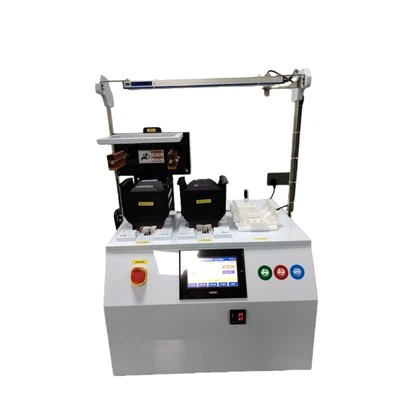
The proton exchange furnace is a critical piece of equipment in the field of materials processing, offering unique capabilities that can significantly alter the properties of the materials it processes. As a leading supplier of proton exchange furnaces, I have witnessed firsthand the transformative impact these furnaces can have on a wide range of materials. In this blog post, I will delve into how the proton exchange furnace affects the properties of processed materials, exploring the underlying mechanisms and the practical implications for various industries.
Understanding the Proton Exchange Furnace
Before we discuss how the proton exchange furnace affects material properties, it's essential to understand what it is and how it works. A proton exchange furnace is a specialized thermal processing device designed to facilitate the exchange of protons within a material. This process typically occurs at high temperatures, where protons can move more freely within the material's lattice structure.
The furnace consists of a heating chamber, a gas supply system, and a control unit. The heating chamber is where the material is placed for processing. The gas supply system provides the necessary atmosphere for the proton exchange process, often using hydrogen or other proton - containing gases. The control unit regulates the temperature, gas flow rate, and other parameters to ensure precise and consistent processing conditions.
Impact on Physical Properties
Density and Porosity
One of the primary ways the proton exchange furnace affects materials is by altering their density and porosity. During the proton exchange process, protons can diffuse into the material's lattice, filling in voids and vacancies. This can lead to a decrease in porosity and an increase in density. For example, in ceramic materials, the introduction of protons can help to sinter the particles more effectively, resulting in a denser and more compact structure.
The change in density and porosity can have significant implications for the material's mechanical and thermal properties. A denser material generally has higher strength and better thermal conductivity, making it more suitable for applications where these properties are crucial, such as in high - performance engineering components.
Grain Size and Structure
The proton exchange process can also influence the grain size and structure of the material. At high temperatures, protons can act as a catalyst for grain growth and recrystallization. By controlling the processing parameters, such as temperature and time, it is possible to manipulate the grain size and orientation of the material.
A finer grain size often leads to improved mechanical properties, such as higher strength and ductility. In some cases, the proton exchange furnace can be used to produce materials with a preferred grain orientation, which can enhance their anisotropic properties, such as electrical conductivity or magnetic susceptibility.
Impact on Chemical Properties
Composition and Stoichiometry
The proton exchange furnace can cause changes in the chemical composition and stoichiometry of the processed material. Protons can react with the material's atoms, leading to the formation of new chemical compounds or the modification of existing ones. For example, in metal oxides, protons can reduce the oxidation state of the metal ions, resulting in a change in the material's chemical formula.
These changes in composition and stoichiometry can have a profound impact on the material's chemical and electrochemical properties. For instance, in battery materials, the proton exchange process can be used to optimize the lithium - ion intercalation and de - intercalation behavior, improving the battery's performance and cycle life.
Surface Chemistry
The surface chemistry of the material is also affected by the proton exchange process. Protons can adsorb onto the material's surface, altering its surface energy and reactivity. This can have implications for processes such as adhesion, catalysis, and corrosion resistance.
For example, in the case of catalytic materials, the proton - modified surface can provide more active sites for chemical reactions, enhancing the catalyst's efficiency. In corrosion - resistant materials, the proton - induced surface changes can form a protective layer that inhibits the corrosion process.
Impact on Electrical and Magnetic Properties
Electrical Conductivity
The proton exchange furnace can significantly influence the electrical conductivity of materials. Protons are charged particles, and their movement within the material can contribute to electrical conduction. In some materials, such as proton - conducting ceramics, the proton exchange process can enhance the proton conductivity, making them suitable for applications in fuel cells and other electrochemical devices.


In addition, the changes in chemical composition and structure induced by the proton exchange process can also affect the electronic conductivity of the material. For example, in semiconductors, the introduction of protons can dope the material, altering its carrier concentration and mobility, and thus its electrical properties.
Magnetic Properties
The proton exchange process can also have an impact on the magnetic properties of materials. Protons have a magnetic moment, and their presence in the material can interact with the magnetic moments of the atoms, leading to changes in the material's magnetic behavior.
In some magnetic materials, the proton exchange can be used to tune the Curie temperature, the temperature at which the material undergoes a magnetic phase transition. This can be useful for applications where precise control of magnetic properties is required, such as in magnetic sensors and data storage devices.
Applications in Different Industries
Electronics Industry
In the electronics industry, the proton exchange furnace is used to process materials for various components, such as semiconductors, capacitors, and resistors. By altering the electrical and chemical properties of these materials, the furnace can improve the performance and reliability of electronic devices. For example, in the production of semiconductor chips, the proton exchange process can be used to dope the silicon substrate, controlling the electrical conductivity and carrier mobility.
Energy Industry
The energy industry also benefits from the use of proton exchange furnaces. In fuel cells, proton - conducting materials are crucial for the efficient transfer of protons. The proton exchange furnace can be used to produce high - quality proton - conducting ceramics with excellent conductivity and stability. Additionally, in battery materials, the furnace can be used to optimize the electrochemical properties of electrodes, improving the battery's energy density and cycle life.
Materials Science Research
In materials science research, the proton exchange furnace is a valuable tool for studying the fundamental properties of materials. By precisely controlling the proton exchange process, researchers can investigate the relationship between the material's structure, composition, and properties. This knowledge can be used to develop new materials with tailored properties for specific applications.
Related Equipment
If you are interested in other thermal processing equipment related to the proton exchange furnace, we also offer a range of high - quality products. Our Tube Thermal Furnace is suitable for various heat treatment processes, providing precise temperature control and uniform heating. The Wet Oxidation Furnace is designed for oxidation processes in a wet environment, which can be used to modify the surface properties of materials. And our Automatic RTP Equipment offers rapid thermal processing capabilities, enabling quick and efficient material treatment.
Conclusion
The proton exchange furnace is a powerful tool for altering the properties of processed materials. By influencing the physical, chemical, electrical, and magnetic properties of materials, it can open up new possibilities for a wide range of industries. Whether you are in the electronics, energy, or materials science research field, the proton exchange furnace can help you achieve your goals in terms of material performance and product development.
If you are interested in learning more about our proton exchange furnaces or other thermal processing equipment, or if you have specific requirements for material processing, please feel free to contact us for a procurement discussion. We are committed to providing you with the best solutions and high - quality products to meet your needs.
References
- Smith, J. (2018). Thermal Processing of Materials. Springer.
- Jones, A. (2019). Proton Conducting Materials for Energy Applications. Wiley.
- Brown, C. (2020). Advances in Materials Science and Engineering. Elsevier.