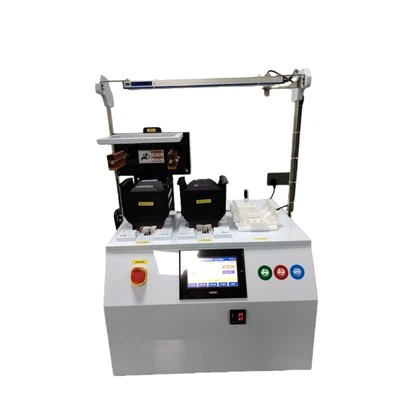
Hey there! As a supplier of LPCVD Equipment, I'm super stoked to chat about the wide range of applications this awesome piece of tech has. Low-Pressure Chemical Vapor Deposition (LPCVD) equipment is a real game - changer in various industries, and I'm gonna break down some of the most important uses for you.
Semiconductor Industry
First off, let's talk about the semiconductor industry. This is where LPCVD equipment really shines. In semiconductor manufacturing, thin films are crucial. They're used to create transistors, interconnects, and other essential components of integrated circuits.
LPCVD can deposit high - quality silicon nitride and polysilicon films. Silicon nitride is a great material for gate dielectrics and passivation layers. It provides excellent electrical insulation and protects the underlying semiconductor layers from environmental factors like moisture and contaminants. With LPCVD, we can precisely control the thickness and composition of the silicon nitride film, which is super important for the performance and reliability of the semiconductor devices.
Polysilicon, on the other hand, is used as a gate electrode in MOSFETs (Metal - Oxide - Semiconductor Field - Effect Transistors). LPCVD allows us to deposit polysilicon with a uniform grain size and low stress. This uniformity is key because it ensures consistent electrical properties across the entire semiconductor wafer. For example, if the grain size of the polysilicon varies too much, it can lead to differences in the threshold voltage of the MOSFETs, which can mess up the overall performance of the integrated circuit.
Photovoltaic Industry
The photovoltaic industry is another area where LPCVD equipment plays a big role. Solar cells are all about converting sunlight into electricity, and the efficiency of this conversion depends a lot on the quality of the thin films used in the solar cell structure.

One of the main applications in this industry is the deposition of anti - reflection coatings. These coatings are typically made of silicon nitride or other dielectric materials. By using LPCVD, we can deposit a very thin and uniform anti - reflection coating on the surface of the solar cell. This coating reduces the amount of light reflected off the surface of the cell, allowing more light to be absorbed by the semiconductor material inside the cell. As a result, the efficiency of the solar cell increases.
LPCVD can also be used to deposit passivation layers on the solar cell. These passivation layers help to reduce the recombination of charge carriers (electrons and holes) at the surface of the semiconductor. Recombination is a big problem in solar cells because it reduces the number of charge carriers available to generate an electric current. By using LPCVD to deposit high - quality passivation layers, we can improve the overall performance and stability of the solar cells.
Microelectromechanical Systems (MEMS)
MEMS devices are tiny mechanical and electrical devices that are integrated on a single chip. They're used in a wide range of applications, from accelerometers in smartphones to pressure sensors in automotive systems.
LPCVD is used in MEMS manufacturing to deposit structural layers and sacrificial layers. Structural layers are used to form the mechanical parts of the MEMS device, such as cantilevers, bridges, and membranes. Sacrificial layers, on the other hand, are used to create gaps and cavities in the MEMS structure during the manufacturing process.
For example, in the fabrication of a MEMS accelerometer, LPCVD can be used to deposit a polysilicon structural layer. This layer forms the proof mass and the suspension beams of the accelerometer. The precise control of the deposition process provided by LPCVD ensures that the mechanical properties of the structural layer, such as its stiffness and mass, are well - defined. This is crucial for the accurate measurement of acceleration by the accelerometer.
Optical Industry
In the optical industry, LPCVD equipment is used to fabricate optical waveguides and other photonic devices. Optical waveguides are used to guide light in optical communication systems, such as fiber - optic networks.
LPCVD can deposit silicon - based materials, such as silicon dioxide and silicon nitride, to form the core and cladding layers of the optical waveguide. The refractive index difference between the core and cladding layers is what allows the light to be guided through the waveguide. By using LPCVD, we can precisely control the refractive index and thickness of these layers, which is essential for the efficient propagation of light in the waveguide.
Another application in the optical industry is the fabrication of micro - optical elements, such as microlenses and diffraction gratings. LPCVD can be used to deposit thin films with specific optical properties, which can then be patterned to form these micro - optical elements.
Comparison with Other CVD Technologies
It's worth comparing LPCVD with other Chemical Vapor Deposition (CVD) technologies, like PECVD Equipment and ICP - CVD System.
PECVD (Plasma - Enhanced Chemical Vapor Deposition) uses a plasma to enhance the chemical reactions during the deposition process. This allows PECVD to deposit films at lower temperatures compared to LPCVD. However, the films deposited by PECVD may have higher stress and lower density compared to LPCVD films. In applications where high - quality, low - stress films are required, like in semiconductor manufacturing, LPCVD is often the preferred choice.
ICP - CVD (Inductively Coupled Plasma Chemical Vapor Deposition) is another type of CVD technology. It uses an inductively coupled plasma to generate high - energy ions, which can help to improve the deposition rate and the quality of the films. But ICP - CVD systems are more complex and expensive compared to LPCVD equipment. For applications where cost - effectiveness and simplicity are important, LPCVD is a great option.
Conclusion
So, as you can see, LPCVD equipment has a wide range of applications in various industries, from semiconductors to photovoltaics, MEMS, and optics. Its ability to deposit high - quality, uniform thin films with precise control over thickness and composition makes it an indispensable tool in modern manufacturing.
If you're in the market for LPCVD equipment or have any questions about its applications, don't hesitate to reach out. We're here to help you find the best solution for your specific needs. Whether you're a small - scale research lab or a large - scale manufacturing facility, we've got the expertise and the equipment to support your projects. Let's start a conversation and see how we can work together to take your business to the next level!
References
- Sze, S. M., & Ng, K. K. (2007). Physics of Semiconductor Devices. Wiley.
- Green, M. A. (2003). Third Generation Photovoltaics: Advanced Solar Energy Conversion. Springer.
- Madou, M. J. (2002). Fundamentals of Microfabrication: The Science of Miniaturization. CRC Press.