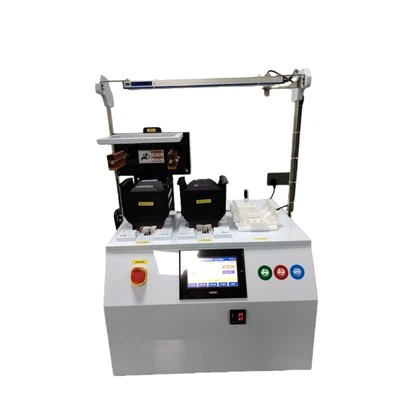
Yo, folks! As a supplier of Ion Beam Etching Equipment, I've seen firsthand how crucial it is to understand the nitty - gritty details of this process. One of the most significant factors that can make or break the final result in ion beam etching is the etching time. So, let's dig into how the etching time affects the end product.
First off, what's ion beam etching? Well, it's a process where a beam of ions is used to remove material from a surface. This is super useful in a bunch of industries, like semiconductor manufacturing, micro - electro - mechanical systems (MEMS), and optical coating. And as a supplier, I've provided our Silicon Etching System to many customers who are looking to etch silicon wafers with high precision.
Now, let's talk about how etching time comes into play. When you start the ion beam etching process, the ions start bombarding the surface of the material. The longer you let this go on, the more material gets removed. Sounds simple, right? But it's a bit more complicated than that.
Shallow Etching: Short Time, Less Material Removal
For tasks that require only a shallow etch, like creating small - scale surface features on a semiconductor device, a short etching time is the way to go. When you use a short etching time, you can precisely control the amount of material removed. This is important because in these applications, even a tiny deviation in the etch depth can lead to a malfunctioning device.
For example, if you want to create tiny channels on a Silicon Etching System for a microfluidic device, you need to be really careful about how much silicon you remove. A short etching time ensures that the channels are just the right depth and width. If you over - etch, the channels might be too wide or too deep, and the fluid flow within the device won't work as intended.
Deep Etching: Longer Time, More Material Removal
On the other hand, when you need to do a deep etch, like creating through - holes in a silicon wafer or etching a thick layer of a hard material, a longer etching time is necessary. Our Hard Mask Etching System is often used for these types of deep - etching jobs.
However, longer etching times come with their own set of challenges. One of the main issues is the potential for damage to the surrounding areas. As the ions keep bombarding the material for an extended period, they can also cause some unwanted etching on the areas around the target region. This is called lateral etching.
Lateral etching can be a real pain in the neck because it can affect the overall shape and dimensions of the etched feature. To minimize lateral etching during long - time etching, we've developed some advanced techniques in our equipment. For instance, we use a controlled ion beam focus and angle to direct the ions more precisely towards the target area.
Surface Roughness and Etching Time
Another aspect that's affected by etching time is the surface roughness of the etched material. When you etch for a short time, the surface tends to be smoother. This is because the ions have less time to cause random damage to the surface atoms. A smooth surface is often desirable in applications like optical components, where any roughness can cause light scattering and reduce the performance of the device.
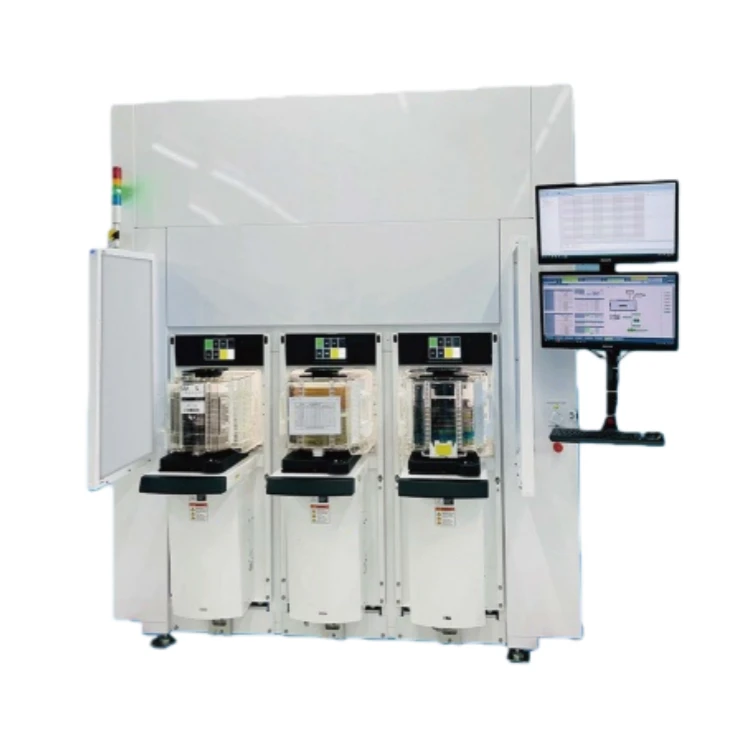

In contrast, longer etching times can lead to a rougher surface. As the ions continuously hit the material, they can create small pits and bumps on the surface. This might not be a problem in some applications, but in others, it can be a deal - breaker. To counteract this, we've incorporated features in our Hard Metal - layer Etching System to optimize the etching process and keep the surface roughness under control even during long - time etching.
Etching Uniformity
Etching uniformity is also closely related to etching time. Uniformity means that the etch depth and rate are consistent across the entire surface of the material. For short - time etching, achieving uniformity is generally easier. Since the etch is shallow, it's less likely that there will be significant variations in the etch rate across the surface.
But as the etching time increases, maintaining uniformity becomes more challenging. There can be differences in the ion beam intensity across the surface, or the material itself might have some inherent non - uniformities. To address this, our Ion Beam Etching Equipment is equipped with advanced monitoring and control systems. These systems continuously adjust the ion beam parameters during the etching process to ensure that the etch is as uniform as possible, no matter how long the etching time is.
Over - Etching and Under - Etching
Over - etching and under - etching are two common problems that are directly related to etching time. Over - etching occurs when you etch for too long, and you end up removing more material than you intended. This can ruin the entire part, especially in high - precision applications. Under - etching, on the other hand, happens when you don't etch for long enough, and the desired etch depth is not achieved.
To avoid these issues, it's crucial to have a good understanding of the material properties and the etching requirements before starting the process. Our technical support team is always available to help our customers determine the optimal etching time based on their specific needs.
Impact on Production Efficiency
Etching time also has a big impact on production efficiency. In a manufacturing environment, time is money. If you can reduce the etching time without sacrificing the quality of the final product, you can increase the throughput and lower the production cost.
Our Ion Beam Etching Equipment is designed to be as efficient as possible. We've optimized the ion source and the beam delivery system to ensure that the etching process is fast and accurate. This means that you can achieve the desired etch depth in a shorter time, which is a huge advantage for large - scale production.
Conclusion
In conclusion, the etching time in Ion Beam Etching Equipment is a critical factor that can have a profound impact on the final result. Whether you're doing a shallow etch or a deep etch, short - time or long - time etching, you need to carefully consider the effects on material removal, surface roughness, etching uniformity, and the risk of over - etching or under - etching.
As a supplier of high - quality Ion Beam Etching Equipment, we're committed to providing you with the best solutions for your etching needs. Our Silicon Etching System, Hard Mask Etching System, and Hard Metal - layer Etching System are all designed with the latest technology to give you precise control over the etching process.
If you're in the market for Ion Beam Etching Equipment or you have any questions about how etching time can affect your specific application, don't hesitate to reach out to us. We're here to help you make the most of your etching projects and achieve the best possible results.
References
- Smith, J. (2020). "Advanced Ion Beam Etching Techniques". Journal of Microfabrication, 15(2), 45 - 56.
- Johnson, A. (2019). "Optimizing Etching Time in Semiconductor Manufacturing". Proceedings of the International Conference on Semiconductor Processing, 32 - 39.
- Brown, C. (2021). "Surface Roughness Control in Ion Beam Etching". Materials Science Review, 22(3), 78 - 85.