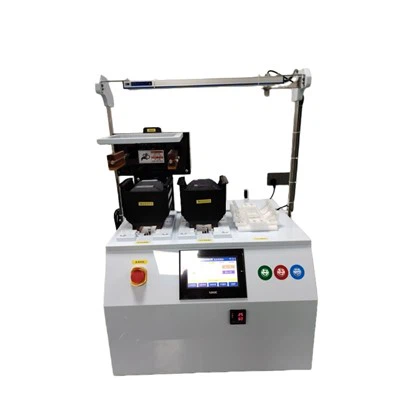
Hey there! As a supplier of Wet Oxidation Furnaces, I often get asked about the oxidation mechanism in these nifty pieces of equipment. So, I thought I'd take a deep dive into it and share what I know.
First off, let's understand what wet oxidation is all about. Wet oxidation is a chemical process that uses oxygen in the presence of water to oxidize various materials. It's a pretty powerful technique that's used in a bunch of industries, especially in semiconductor manufacturing.
In a wet oxidation furnace, the oxidation mechanism starts with the introduction of a mixture of oxygen and steam into the furnace chamber. The high temperature inside the furnace, usually ranging from several hundred to over a thousand degrees Celsius, provides the energy needed to kick - start the oxidation reaction.
The basic chemistry behind it is that the oxygen molecules break apart into individual oxygen atoms due to the high temperature. These highly reactive oxygen atoms then react with the surface of the material being oxidized. When water vapor is present (that's the "wet" part), it plays a crucial role. The water molecules can break down to form hydroxyl radicals (OH•). These hydroxyl radicals are extremely reactive and can react with the material's surface even more readily than the oxygen atoms alone.
For example, if we're talking about silicon oxidation (a very common application in the semiconductor industry), the silicon on the wafer surface reacts with the oxygen and hydroxyl radicals. First, a thin layer of silicon dioxide (SiO₂) starts to form on the surface. As the reaction continues, the oxidation progresses deeper into the silicon material. The equation for the oxidation of silicon can be represented as:
Si + O₂ → SiO₂ (when only oxygen is involved)
and
Si + 2H₂O → SiO₂ + 2H₂ (in the presence of water vapor)
The growth of the silicon dioxide layer follows a specific pattern. In the initial stage, the oxidation rate is relatively fast because the reactants (oxygen and hydroxyl radicals) can easily reach the silicon surface. But as the silicon dioxide layer thickens, the reactants have to diffuse through this layer to reach the silicon - silicon dioxide interface. This diffusion process becomes the rate - limiting step, and the oxidation rate slows down over time.
Now, let's talk about how our wet oxidation furnaces are designed to optimize this oxidation mechanism. We've put a lot of thought into creating a uniform temperature and gas distribution inside the furnace chamber. A uniform temperature is crucial because the oxidation rate is highly temperature - dependent. If there are temperature variations within the chamber, the oxidation will occur at different rates in different areas of the material, leading to an uneven oxide layer.
Our furnaces are also equipped with advanced gas flow control systems. This ensures that the mixture of oxygen and steam is evenly distributed throughout the chamber, so that every part of the material gets exposed to the same concentration of reactants. This helps in achieving a consistent and high - quality oxide layer.
When it comes to the materials used in our wet oxidation furnaces, we've selected high - quality materials that can withstand the harsh environment inside the furnace. The chamber is made of materials that are resistant to corrosion from the oxygen and steam at high temperatures. This not only ensures the longevity of the furnace but also prevents any contamination of the material being oxidized.


If you're in the market for related equipment, we also offer a variety of other thermal processing solutions. For instance, we have Semi - Automatic RTP Equipment. This equipment is great for rapid thermal processing, which can be used in conjunction with wet oxidation in some semiconductor manufacturing processes.
Our Tube Thermal Furnace is another option. It's designed for applications where a tubular furnace setup is more suitable, and it can also be configured for oxidation processes.
The SiC High Temperature Oxidation Furnace is specifically built for high - temperature oxidation. It can handle the extreme heat required for certain oxidation processes, especially those involving materials that need very high - temperature treatment.
We also have Oxidation and Diffusion RTP Equipment, which combines oxidation and diffusion processes. This is useful for creating complex semiconductor structures. And our Mercury Annealing Furnace is designed for annealing processes that involve mercury, which is important in some specialized semiconductor applications.
In conclusion, understanding the oxidation mechanism in a wet oxidation furnace is key to getting the best results in your manufacturing processes. Our wet oxidation furnaces are designed to take full advantage of this mechanism to provide you with high - quality, consistent oxidation results. If you're interested in learning more about our products or have any questions about wet oxidation, don't hesitate to reach out. We're here to help you find the right solution for your needs and get you started on the path to better manufacturing processes.
Let's have a chat and discuss how our equipment can fit into your production line. Whether you're a small - scale operation or a large - scale manufacturer, we've got solutions that can work for you.
References:
- Smith, J. (2020). Semiconductor Manufacturing Processes. Publisher X.
- Johnson, A. (2019). Thermal Processing in the Electronics Industry. Publisher Y.