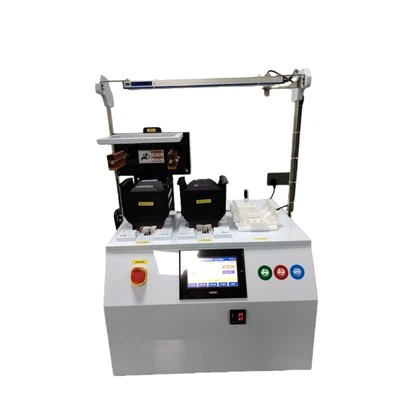
The chamber pressure in a Reactive Ion Etching (RIE) Etcher is a critical parameter that significantly influences the etching process. As a leading supplier of RIE Etcher, we have in - depth knowledge and experience in understanding how this pressure affects the etching results.
Basic Principles of RIE Etching
Before delving into the impact of chamber pressure, it is essential to understand the basic principles of RIE etching. In an RIE Etcher, a plasma is generated within the chamber by applying a radio - frequency (RF) field to a gas mixture. The plasma consists of ions, electrons, and neutral radicals. The ions are accelerated towards the substrate by an electric field, and they physically bombard the surface of the substrate. At the same time, the radicals react chemically with the substrate material, leading to the removal of material through a combination of physical sputtering and chemical reactions.
Influence of Chamber Pressure on Plasma Characteristics
The chamber pressure has a profound effect on the plasma characteristics in an RIE Etcher. At low pressures (typically in the range of a few millitorr), the mean free path of the ions and radicals is relatively long. This means that the ions can be accelerated to higher energies before colliding with other particles. As a result, the physical sputtering component of the etching process becomes more dominant. The high - energy ions can penetrate deeper into the substrate and cause more anisotropic etching, which is desirable for applications such as creating high - aspect - ratio features in semiconductor manufacturing.
On the other hand, at high pressures (in the range of several hundred millitorr), the mean free path of the particles is short. The ions undergo more collisions with other particles in the plasma, which reduces their energy. The chemical reaction component of the etching process becomes more prominent. The radicals have more opportunities to react with the substrate surface, leading to more isotropic etching. Isotropic etching can be useful for applications where a more uniform etching across the surface is required, such as in some micro - machining processes.
Impact on Etching Rate
The chamber pressure also has a significant impact on the etching rate. Generally, there is an optimal pressure range for achieving the maximum etching rate. At very low pressures, although the ions have high energy, the number of ions and radicals available for etching is relatively small. This is because the low - pressure environment limits the ionization efficiency of the gas. As a result, the etching rate is low.
As the pressure increases, the ionization efficiency improves, and the number of ions and radicals in the plasma increases. This leads to an increase in the etching rate. However, if the pressure is too high, the ions lose too much energy due to collisions, and the etching rate starts to decrease again. The optimal pressure for maximum etching rate depends on various factors, including the type of gas used, the substrate material, and the RF power applied.
Selectivity and Chamber Pressure
Selectivity is another important parameter in RIE etching. It refers to the ratio of the etching rate of the target material to the etching rate of the masking material. The chamber pressure can affect the selectivity of the etching process. At low pressures, the high - energy ions can cause more damage to the masking material, reducing the selectivity. The physical sputtering action can remove the masking material along with the target material, especially if the masking material is relatively thin or has a low sputtering threshold.
At high pressures, the chemical nature of the etching process can enhance the selectivity. The radicals can react more selectively with the target material, while having less of an impact on the masking material. For example, in the etching of silicon using a fluorine - based gas, at high pressures, the fluorine radicals can react preferentially with silicon, while the masking material (such as photoresist) is less affected.

Uniformity of Etching
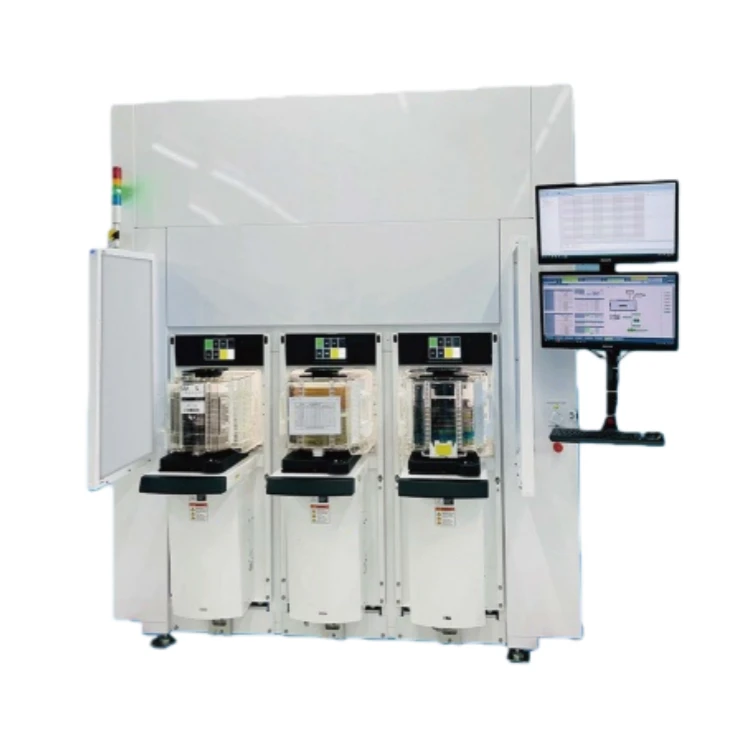
The chamber pressure also plays a role in the uniformity of the etching process. In a large - scale manufacturing environment, it is crucial to achieve uniform etching across the entire substrate. At low pressures, the plasma distribution in the chamber can be non - uniform. The high - energy ions tend to be concentrated in certain regions of the chamber, leading to non - uniform etching. This can be a problem, especially for large - diameter substrates such as RIE Etcher 12 - inch applications.
At high pressures, the plasma is more diffusive, and the distribution of ions and radicals is more uniform across the chamber. This can result in more uniform etching across the substrate. However, other factors such as gas flow distribution, electrode design, and RF power distribution also need to be carefully controlled to ensure good uniformity.
Applications and Optimal Pressure Settings
Different applications require different etching characteristics, and thus, different optimal pressure settings. For semiconductor device manufacturing, where high - aspect - ratio features and high selectivity are often required, low - pressure RIE etching is commonly used. The low - pressure environment allows for the creation of vertical sidewalls and precise control over the feature dimensions.
In micro - electro - mechanical systems (MEMS) manufacturing, both low - pressure and high - pressure etching can be used depending on the specific requirements. For example, if a deep and narrow trench needs to be etched, low - pressure etching may be preferred. If a more uniform and isotropic etching is required for creating micro - structures with rounded edges, high - pressure etching can be a better choice.
Our Hard Metal - layer Etching System is designed to operate over a wide range of pressures to accommodate different applications. By carefully controlling the chamber pressure, along with other parameters such as gas flow rate, RF power, and temperature, we can achieve the desired etching results for various materials, including hard metals.
Conclusion
In conclusion, the chamber pressure in an RIE Etcher has a multi - faceted impact on the etching process. It affects the plasma characteristics, etching rate, selectivity, and uniformity. As a supplier of RIE Etchers, we understand the importance of optimizing the chamber pressure for different applications. Our RIE Etchers are equipped with advanced pressure control systems that allow for precise adjustment of the chamber pressure.
If you are interested in learning more about how our RIE Etchers can meet your specific etching requirements or if you want to discuss the optimal pressure settings for your application, please feel free to contact us. We are committed to providing you with the best solutions and support for your etching needs.
References
- "Principles of Plasma Discharges and Materials Processing" by M. A. Lieberman and A. J. Lichtenberg.
- "Semiconductor Manufacturing Technology" by S. Wolf.
- "Microfabrication Technology for Micro - Electro - Mechanical Systems (MEMS)" by M. Elwenspoek and R. Wiegerink.