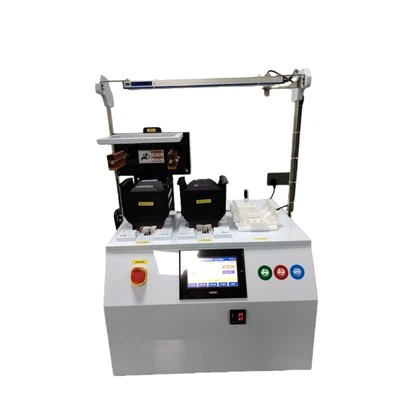
In the realm of modern manufacturing and technological advancement, Automatic RTP (Rapid Thermal Processing) Equipment has emerged as a cornerstone in various industries, particularly in semiconductor manufacturing. As a leading supplier of Automatic RTP Equipment, we understand the critical importance of data security in these high - tech systems. In this blog, we will delve into the data security features of our Automatic RTP Equipment, highlighting how these features protect sensitive information and ensure the smooth operation of your manufacturing processes.
1. Encryption of Data Transmission
One of the primary data security features of our Automatic RTP Equipment is the implementation of robust encryption algorithms for data transmission. When the equipment communicates with other devices, such as control systems or monitoring software, all data packets are encrypted using industry - standard encryption protocols. This encryption ensures that even if the data is intercepted during transmission, it cannot be deciphered by unauthorized parties.
For example, we use AES (Advanced Encryption Standard) encryption, which is widely recognized as one of the most secure encryption algorithms available. AES can encrypt data in blocks of 128, 192, or 256 bits, providing a high level of security. This means that any data related to process parameters, equipment status, and production data is protected during its journey from the Automatic RTP Equipment to other connected systems.
2. Access Control and User Authentication
Access control is a fundamental aspect of data security. Our Automatic RTP Equipment is equipped with a sophisticated access control system that restricts access to the equipment and its data to authorized personnel only. User authentication is required before anyone can log in to the equipment's control interface or access its data.
We offer multiple authentication methods, including password - based authentication, biometric authentication (such as fingerprint scanning), and smart card authentication. These methods ensure that only individuals with the proper credentials can access the equipment and its data. Additionally, access rights can be configured at different levels, allowing administrators to define what actions each user can perform. For instance, a technician may have access to perform maintenance tasks, while a supervisor may have access to view production reports and change process parameters.
3. Data Integrity Checks
Maintaining the integrity of data is crucial for the proper operation of Automatic RTP Equipment. Our equipment employs data integrity checks to ensure that the data stored and transmitted is accurate and has not been tampered with.
We use techniques such as checksums and digital signatures to verify the integrity of data. A checksum is a value calculated from the data, and it can be used to detect any changes in the data. If the checksum of the received data does not match the expected checksum, it indicates that the data may have been corrupted or tampered with. Digital signatures, on the other hand, provide a way to verify the authenticity of the data and the identity of the sender.
4. Secure Storage of Data
The Automatic RTP Equipment stores a significant amount of data, including process history, equipment performance data, and calibration information. To ensure the security of this data, we use secure storage mechanisms.
The data is stored in encrypted form on the equipment's internal storage or on external storage devices. This encryption protects the data from unauthorized access, even if the storage device is physically removed from the equipment. Additionally, the storage systems are designed to be resistant to physical attacks, such as tampering or theft.


5. Audit Trails and Logging
Audit trails and logging are essential for tracking and monitoring the activities related to the Automatic RTP Equipment. Our equipment keeps a detailed record of all user actions, system events, and data access.
These logs can be used for security audits, compliance purposes, and troubleshooting. For example, if there is a security incident, the audit trails can be used to determine who accessed the equipment, what actions were performed, and when they were performed. This information can be invaluable in identifying the source of the problem and taking appropriate measures to prevent future incidents.
6. Network Isolation and Firewall Protection
In an increasingly connected world, network security is of utmost importance. Our Automatic RTP Equipment is designed with network isolation and firewall protection to prevent unauthorized access from external networks.
The equipment can be configured to operate in a closed - loop network, where it is isolated from the public internet. This reduces the risk of external attacks and ensures that the data within the equipment remains secure. Additionally, a firewall is installed to monitor and control incoming and outgoing network traffic. The firewall can be configured to block suspicious traffic and prevent unauthorized access to the equipment.
7. Regular Software Updates
To stay ahead of emerging security threats, our Automatic RTP Equipment receives regular software updates. These updates not only improve the performance and functionality of the equipment but also address any security vulnerabilities that may be discovered.
Our development team continuously monitors the security landscape and releases software updates as needed. These updates are tested thoroughly before being deployed to ensure that they do not cause any disruptions to the equipment's operation.
Importance of Data Security in Automatic RTP Equipment
The data security features of our Automatic RTP Equipment are not just a luxury; they are a necessity. In the semiconductor manufacturing industry, where the production processes are highly sensitive and complex, protecting data is crucial for maintaining the quality and efficiency of production.
For example, the process parameters stored in the Automatic RTP Equipment are often proprietary and highly valuable. If these parameters were to be leaked or tampered with, it could result in significant financial losses and damage to the company's reputation. Additionally, the data related to equipment performance and production history can be used for process optimization and quality control. Ensuring the security of this data is essential for making informed decisions and improving the overall manufacturing process.
Conclusion
As a supplier of Automatic RTP Equipment, we are committed to providing our customers with the highest level of data security. Our Automatic RTP Equipment is equipped with a comprehensive set of data security features, including encryption, access control, data integrity checks, secure storage, audit trails, network isolation, and regular software updates.
These features not only protect your sensitive data but also ensure the smooth and reliable operation of your manufacturing processes. If you are in the market for high - quality Automatic RTP Equipment with top - notch data security, we invite you to contact us for a detailed discussion. We can provide you with more information about our products and how they can meet your specific needs.
In addition to our Automatic RTP Equipment, we also offer other related products such as Wet Oxidation Furnace and Low - Temperature RTP Equipment. These products also incorporate advanced data security features to ensure the protection of your data.
If you are interested in learning more about our products or would like to discuss a potential purchase, please feel free to reach out to us. We look forward to the opportunity to work with you and help you achieve your manufacturing goals.
References
- Schneier, B. (2000). Secrets and Lies: Digital Security in a Networked World. Wiley.
- Stallings, W. (2017). Cryptography and Network Security: Principles and Practice. Pearson.
- Anderson, R. (2008). Security Engineering: A Guide to Building Dependable Distributed Systems. Wiley.